
Fish are extraordinarily diverse aquatic animals, and a useful overview has to go well beyond the familiar image of a scaly, perch-shaped swimmer. Living fishes include jawless hagfishes and lampreys, cartilaginous sharks and rays, the enormous radiation of ray-finned fishes, and living lobe-finned fishes such as lungfishes and coelacanths. They occupy fresh water, salt water, brackish estuaries, deep oceans, fast rivers, caves, reefs, polar seas, and even habitats where some species spend meaningful time exposed to air.
The diversity is still changing as scientists describe new species and revise classifications. The September 21, 2026 version of Eschmeyer’s Catalog of Fishes records 37,772 valid fish species, including 19,358 tagged as freshwater. Those numbers should be treated as a dated snapshot, not a permanent total, because taxonomy changes as species are discovered, split, combined, or reassigned.
These fish facts focus on the major biological patterns that make fishes successful in water: how their bodies are built, how gills exchange gases, how fins and muscles produce movement, how fish sense their surroundings, how they feed and reproduce, where they live, how they migrate, and why their conservation status varies so much from one species and population to another.
Quick Overview of Fish
Fish as a practical zoological category
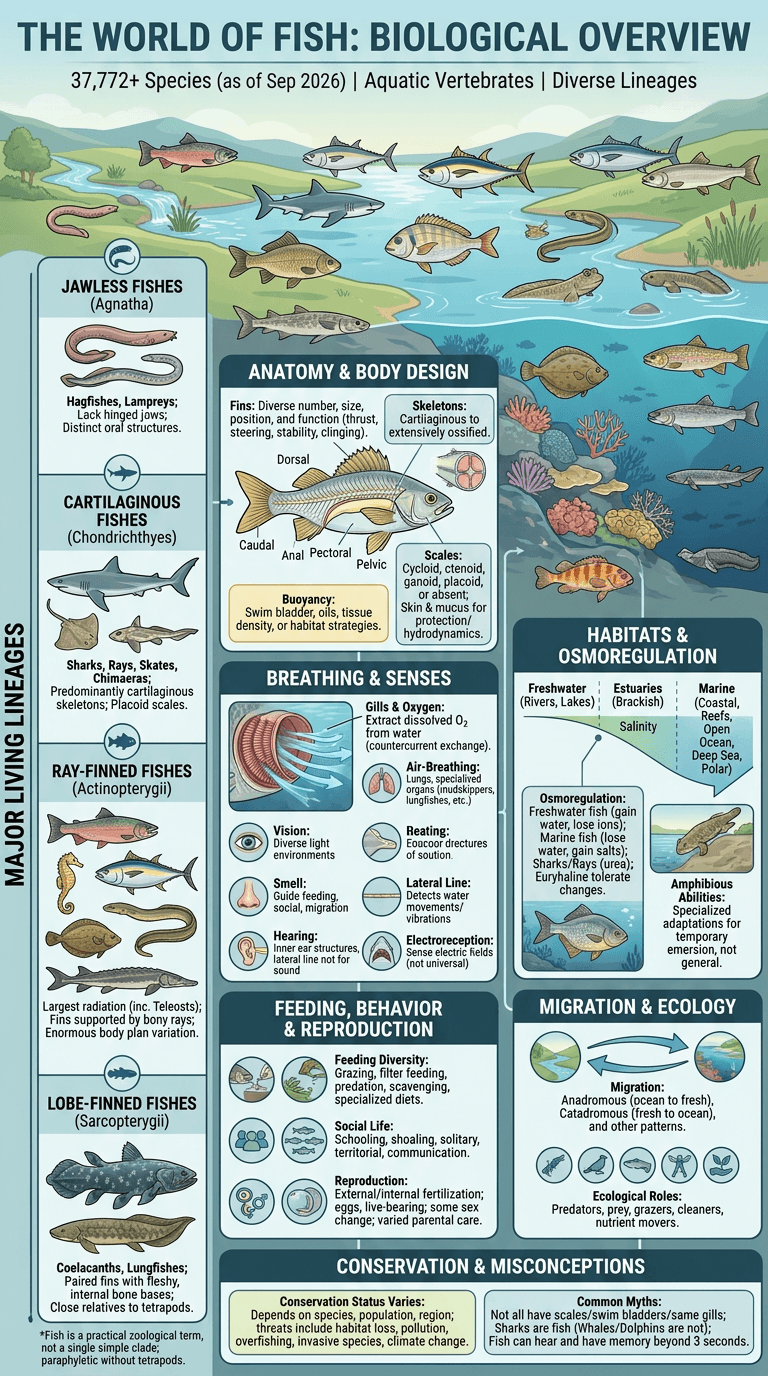
In everyday zoology, “fish” is a practical name for several primarily aquatic vertebrate lineages that share a long evolutionary history in water. Most have gills, fins, streamlined or otherwise water-adapted bodies, and sensory systems tuned to aquatic environments. Yet there is no single visible trait that perfectly fits every fish. Some are scaleless, some breathe air, some lack jaws, some lack a swim bladder, and some spend part of their lives out of water.
Why fish are vertebrates but not one simple modern clade
The word “fish” is biologically useful, but modern evolutionary classification adds an important wrinkle. Tetrapods, the lineage that includes amphibians, reptiles, birds, and mammals, arose within the broader lobe-finned vertebrate branch. If tetrapods are excluded from the everyday category “fish,” the remaining fishes do not form one complete clade containing every descendant of their common ancestor. Biologists describe that kind of grouping as paraphyletic.
A modern review of fish genomics describes living fishes as jawless, cartilaginous, actinopterygian, and sarcopterygian lineages and explains why fishes, with tetrapods excluded, are non-monophyletic. This is why it is misleading to present “Fish” or “Pisces” as one universally accepted formal class. The everyday word remains extremely useful, but the evolutionary tree is more complicated than a simple fish-versus-land-vertebrate split.
Freshwater and marine diversity at a glance
Fish diversity is not an ocean-only story. Rivers, streams, lakes, floodplains, springs, wetlands, and underground waters support enormous numbers of species, while marine fishes occupy coasts, reefs, continental shelves, open ocean, polar waters, trenches, and deep-sea slopes. Estuaries and deltas add another layer because salinity can change with tides, river flow, seasons, and storms.
What the Fish Topic Includes
Biology, ecology, behavior, and life history
Fish biology spans many connected subjects. Anatomy explains body structures such as fins, gills, skeletons, skin, scales, muscles, and sensory organs. Physiology covers processes such as breathing, salt and water balance, temperature relationships, digestion, circulation, and buoyancy. Behavior adds schooling, territorial defense, courtship, communication, shelter use, foraging, and predator avoidance. Ecology connects those behaviors to habitats, food webs, migrations, and environmental change.
Databases such as FishBase illustrate how broad the field is by organizing information on fish taxonomy, biology, trophic ecology, life history, distribution, and human uses. No single body plan or ecological strategy can represent all fishes.
Why no single fish example tells the whole story
A familiar bony fish such as a bass or perch is useful for learning the names of fins and general body regions, but it is not a universal model. Eels have elongated bodies, flatfishes become strongly asymmetrical during development, seahorses swim upright, rays are dorsoventrally flattened, and many deep-sea fishes have body forms that look nothing like common shallow-water species.
The Major Living Fish Lineages
Jawless fishes: lampreys and hagfishes
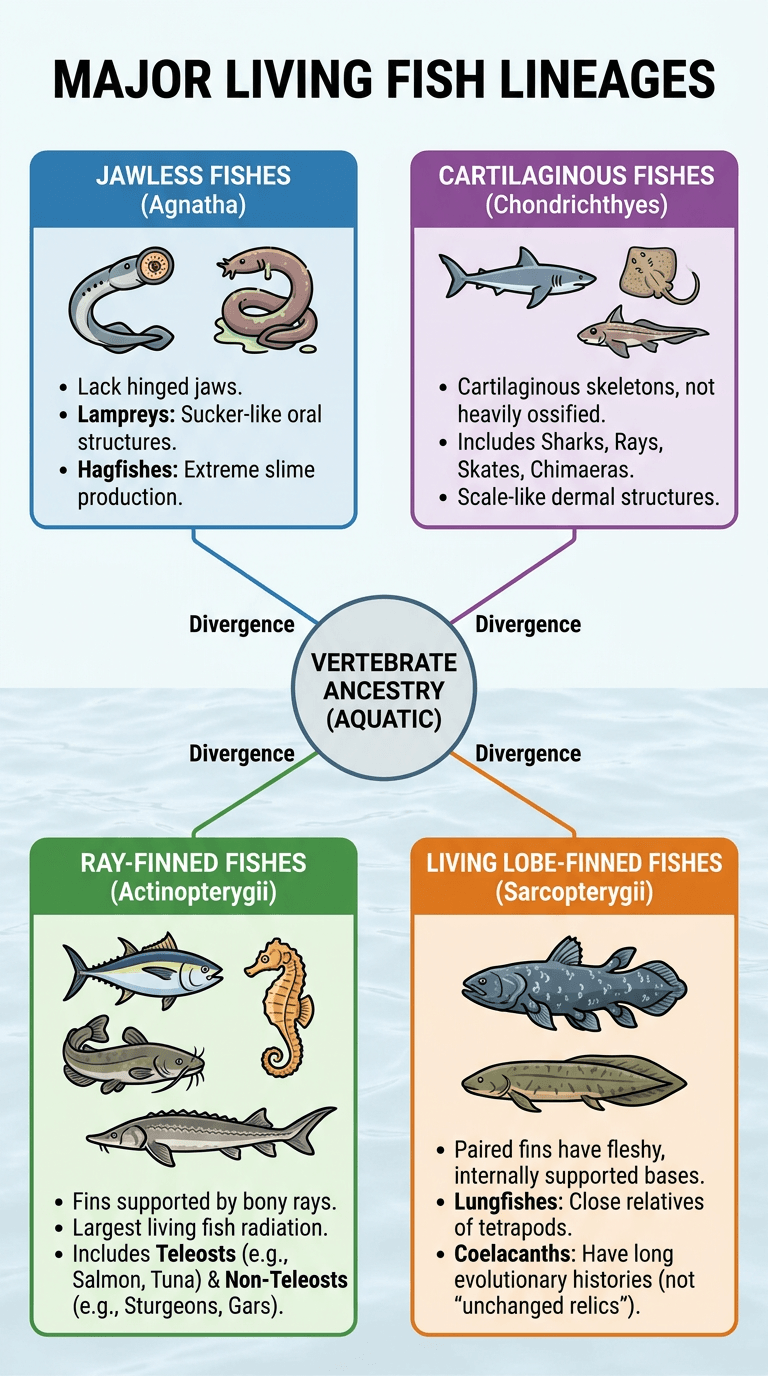
Living jawless fishes include lampreys and hagfishes. They lack the hinged jaws seen in sharks and bony fishes, but they are not simply primitive versions of a modern trout. Lampreys have distinctive sucker-like oral structures, and their life histories range from parasitic forms to species that do not feed as adults. Hagfishes are marine animals known for unusual feeding anatomy and extreme slime production.
Cartilaginous fishes: sharks, rays, skates, and chimaeras
Cartilaginous fishes belong to Chondrichthyes. This group includes sharks, rays, skates, and chimaeras, not sharks alone. Their internal skeletons are predominantly cartilaginous rather than heavily ossified like the skeletons of many bony fishes. They also differ in scale-like dermal structures, reproduction, buoyancy, and sensory systems.
Ray-finned fishes: the largest living fish radiation
Ray-finned fishes, Actinopterygii, contain most living fish species. Their fins are generally supported by bony rays, although the group includes an enormous range of fin shapes and body plans. Salmon, tuna, cod, catfish, cichlids, seahorses, eels, flatfishes, pufferfishes, gars, sturgeons, bowfin, and many other familiar fishes fall within this lineage.
Teleosts make up the largest radiation within ray-finned fishes, but “ray-finned fish” and “teleost” are not synonyms. Sturgeons, paddlefishes, gars, and bowfin are ray-finned fishes outside Teleostei. Keeping that distinction clear prevents one of the most common oversimplifications in basic fish classification.
Living lobe-finned fishes: lungfishes and coelacanths
The living aquatic animals commonly called lobe-finned fishes are lungfishes and coelacanths. Their paired fins contain a fleshy, internally supported base unlike the typical ray-supported fins of actinopterygians. Lungfishes are especially important for understanding vertebrate evolution because living lungfishes are close relatives of tetrapods.
The Smithsonian National Museum of Natural History’s fish research program emphasizes the extraordinary taxonomic and anatomical diversity of fishes. That diversity is a useful reminder not to call coelacanths “unchanged” relics or direct ancestors of modern land vertebrates. Living coelacanths and lungfishes have their own long evolutionary histories.
Fish Anatomy and Body Design
Fins, body shapes, skin, and scales
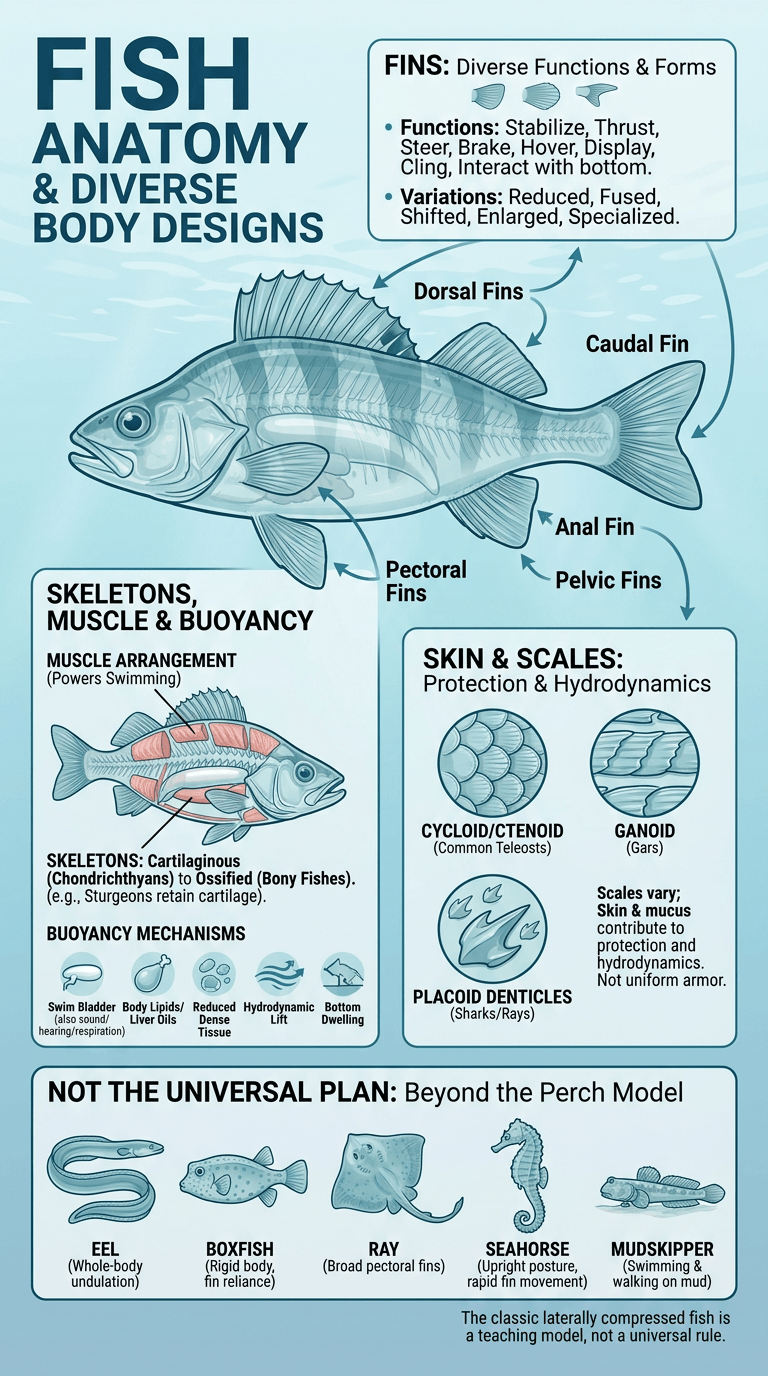
Many fishes have dorsal, caudal, anal, pectoral, and pelvic fins, but fin number, size, position, and function vary widely. Fins can stabilize the body, generate thrust, steer, brake, hover, display, cling, or help a fish interact with the bottom. In some lineages, fins are reduced, fused, shifted, enlarged, or specialized for unusual movements.
Scales also vary. Cycloid and ctenoid scales are common among many teleosts, ganoid scales occur in groups such as gars, and sharks and rays have placoid denticles. Some fishes have reduced scales or no typical scales at all. Skin and mucus can contribute to protection and hydrodynamics, but it is inaccurate to treat the surface of every fish as the same type of armor.
Skeletons, muscle, and buoyancy structures
Fish skeletons range from predominantly cartilaginous systems in chondrichthyans to extensively ossified skeletons in many bony fishes. Even within bony-fish lineages, skeletal construction varies. Sturgeons, for example, are ray-finned fishes despite retaining substantial cartilage in their internal skeleton.
Muscle arranged along the body creates the bending waves that power swimming in many species. Buoyancy can involve a swim bladder, body lipids, liver oils, reduced dense tissue, hydrodynamic lift, or simply life near the bottom where neutral buoyancy is less critical. Swim bladders are widespread but not universal, and in some fishes they also contribute to sound production, hearing, or respiratory functions.
Why a perch-like body is not the universal fish plan
The classic diagram of a laterally compressed fish with five familiar fin types is a teaching model, not a rule. Eels emphasize whole-body undulation, boxfishes have rigid bodies and rely more heavily on fins, rays move broad pectoral fins, seahorses use rapid fin movements while holding an upright posture, and mudskippers combine swimming with movement on exposed mud.
How Fish Breathe, Swim, and Sense Their World
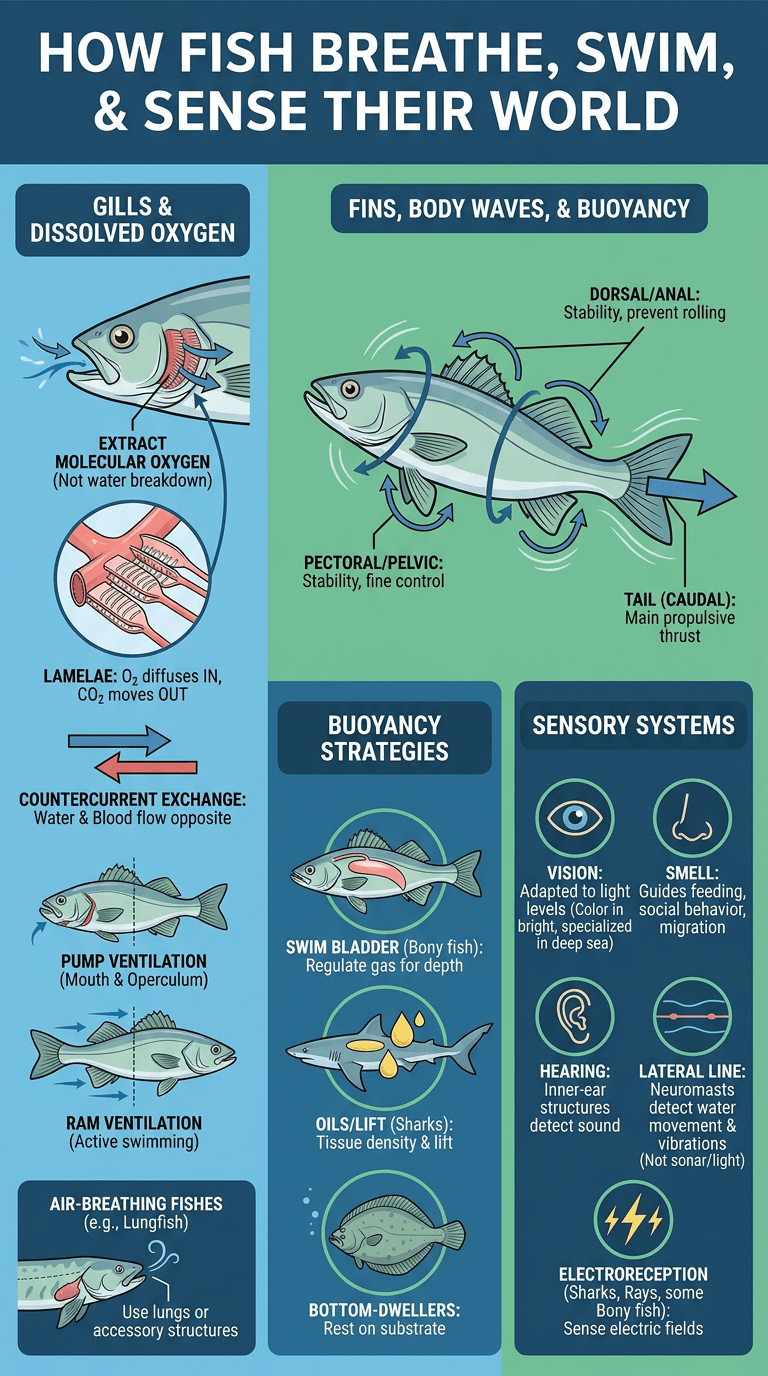
Gills and dissolved oxygen
Fish do not “breathe water” in the sense of breaking apart water molecules. They extract molecular oxygen dissolved in water. In many fishes, water passes over gill surfaces containing thin lamellae where oxygen diffuses into blood and carbon dioxide moves out. Countercurrent exchange, in which water and blood flow in opposite directions across respiratory surfaces, can maintain an effective diffusion gradient.
Ventilation differs among lineages and species. Many bony fishes use mouth and operculum movements to pump water across the gills, while some active species make greater use of ram ventilation. Some sharks can pump water while resting. Air-breathing fishes such as lungfishes, labyrinth fishes, mudskippers, and some catfishes use lungs or accessory respiratory structures in addition to, or partly instead of, ordinary gill ventilation.
Fins, body waves, and buoyancy
Swimming usually comes from coordinated muscle activity, body bending, and fin movement. The tail is important in many fishes, but it is not the only propulsive structure. Pectoral, dorsal, anal, and elongated median fins can provide thrust, stability, or fine control. Some species switch movement styles depending on speed, habitat, or whether they are accelerating, cruising, hovering, or turning.
Buoyancy changes how much effort a fish must spend to hold depth. Many bony fishes regulate gas in a swim bladder, while sharks and other fishes without one rely on different combinations of tissue density, oils, lift, and activity. Bottom-dwellers can use yet another strategy by resting on or closely following the substrate.
Vision, smell, hearing, lateral lines, and electroreception
Fish sensory systems are shaped by the physics of water. Vision ranges from color-sensitive systems in bright habitats to specialized low-light systems in the deep sea. Smell can guide feeding, social behavior, and migration. Fish also hear through inner-ear structures even though they do not have external ears like mammals.
The lateral line is a separate mechanosensory system made of receptors called neuromasts. It detects local water movements and vibrations around the body. It is not sonar and does not detect light. Electroreception, the ability to sense electric fields, occurs in sharks, rays, and selected bony fishes, but it is not a universal fish sense.
How Fish Feed, Behave, and Reproduce
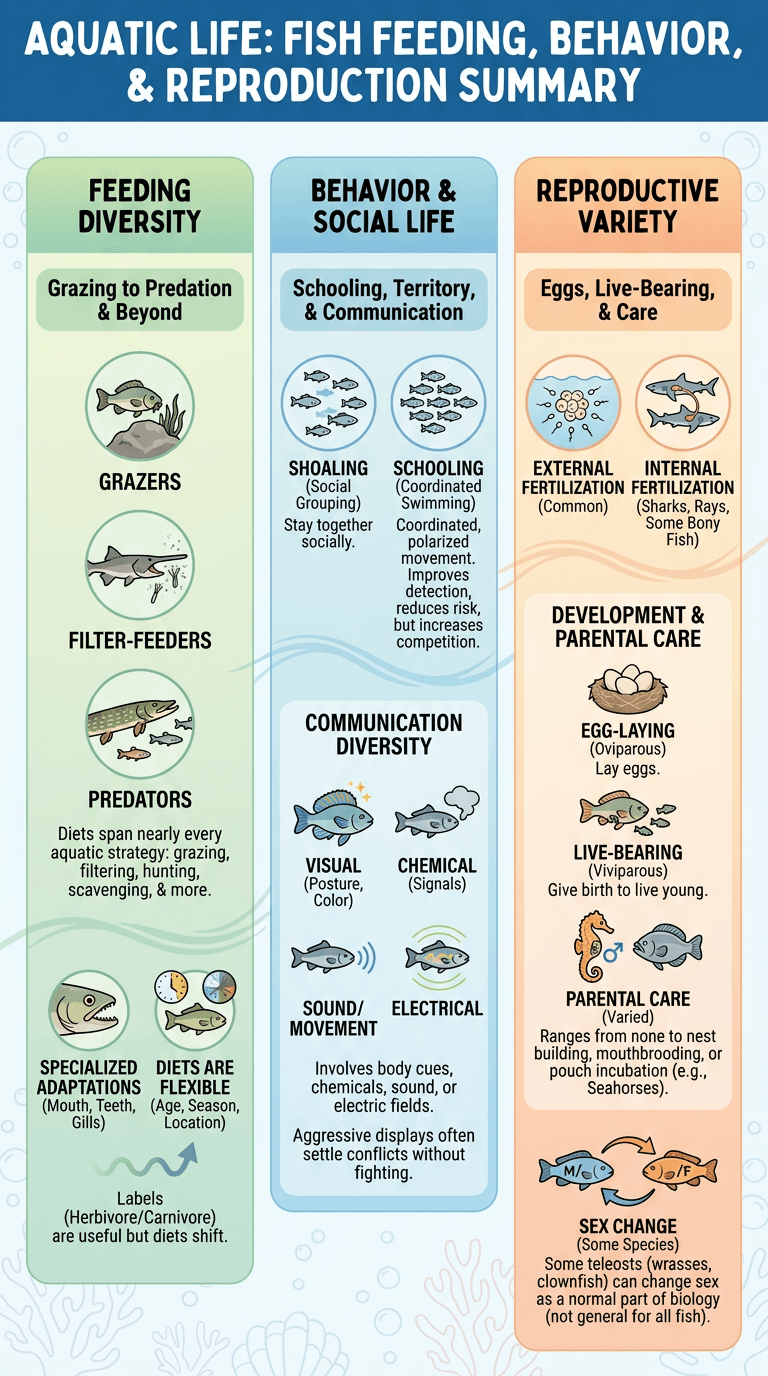
Feeding diversity from grazing to predation
Fish diets span nearly every major feeding strategy in aquatic ecosystems. Some graze algae, some filter plankton, some sift sediment, some crush mollusks, some eat insects or crustaceans, and some hunt other fishes. Scavenging, detritus feeding, parasite feeding, and highly specialized diets also occur.
Mouth position, jaw mechanics, teeth, gill structures, body shape, and habitat often work together. A filter-feeding paddlefish and a predatory pike both qualify as fish, but their feeding equipment and ecological roles are dramatically different. Labels such as herbivore or carnivore are useful summaries, yet real diets can shift with age, season, prey availability, and location.
Schooling, territories, communication, and social life
Some fishes form large social groups, but not all groups are the same. Shoaling generally means fish stay together socially, while schooling usually refers to coordinated, polarized swimming. Grouping can improve predator detection, reduce individual risk, provide social information, or help fish find food and mates, but it can also increase competition or make a group conspicuous to predators.
Other fishes are solitary, territorial, or social only during particular seasons. Communication can involve body posture, color, chemical signals, sound, movement, or electrical signals in species that generate weak electric fields. Aggressive displays often help settle conflicts without prolonged physical fighting.
Eggs, live-bearing, sex change, and parental care
Fish reproduction is far more varied than the simple image of females scattering eggs while males release sperm nearby. External fertilization is common, but internal fertilization also occurs in sharks, rays, and many bony fishes. Some species lay eggs, some retain developing embryos, and some give birth to live young using reproductive systems that differ substantially from mammalian pregnancy.
Parental care ranges from none after spawning to nest building, egg guarding, mouthbrooding, or carrying embryos in specialized structures. Male seahorses, for example, incubate embryos in a brood pouch after females transfer eggs into it. Some wrasses, groupers, clownfishes, and other teleosts can change sex as a normal part of their reproductive biology, but sex change is limited to particular lineages and social systems, not fish in general.
Freshwater, Saltwater, and Fish Habitats
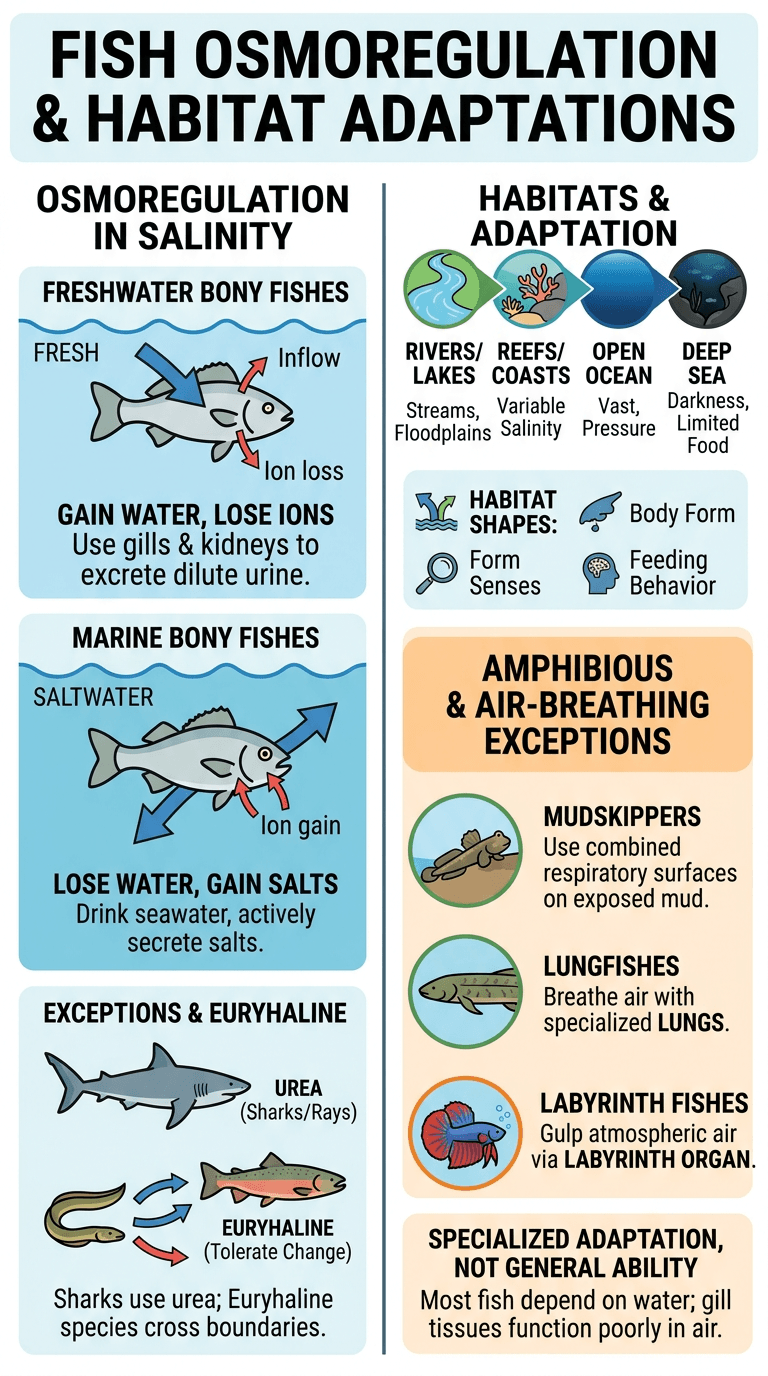
Osmoregulation in different salinities
Fish must keep water and dissolved ions within workable ranges inside their bodies, a process called osmoregulation. In broad terms, freshwater bony fishes tend to gain water and lose ions to their surroundings, while many marine bony fishes tend to lose water and gain salts. Gills, kidneys, drinking behavior, and specialized ion-transport cells help correct those imbalances.
Sharks and rays use a different strategy involving urea and other osmolytes, so the standard marine teleost explanation cannot simply be applied to them. Some fishes are euryhaline, meaning they tolerate substantial salinity changes. Salmon, eels, bull sharks, and selected killifishes illustrate different ways that fish can cross or use fresh and salt water.
Rivers, lakes, estuaries, reefs, open ocean, and deep sea
Freshwater fishes live in habitats ranging from fast mountain streams to warm floodplains and isolated desert springs. Marine fishes occupy coral reefs, kelp forests, mangroves, seagrass beds, rocky coasts, continental shelves, open water, polar seas, and the deep ocean. Each setting imposes different combinations of temperature, oxygen, light, pressure, flow, salinity, substrate, and food availability.
Habitat does not merely determine where a fish is found. It helps shape body form, sensory priorities, feeding behavior, reproduction, and movement. Deep-sea fishes may face darkness and limited food, reef fishes often navigate complex three-dimensional spaces, and river fishes may contend with currents that change dramatically across seasons.
Amphibious and air-breathing exceptions
Most fishes depend heavily on water to support their gills and bodies, but some lineages push the boundary. Mudskippers spend substantial time on exposed mud and use a combination of respiratory surfaces. Lungfishes breathe air with lungs, and labyrinth fishes can gulp atmospheric air into a specialized organ. Other amphibious fishes survive temporary emersion under species-specific conditions.
These examples do not mean a typical fish can simply live on land. Gill tissues of many fishes function poorly when unsupported in air, and heat, dehydration, oxygen limitation, and stress can quickly become serious. Amphibious behavior is a specialized adaptation, not a general fish ability.
Fish Migration and Ecological Roles
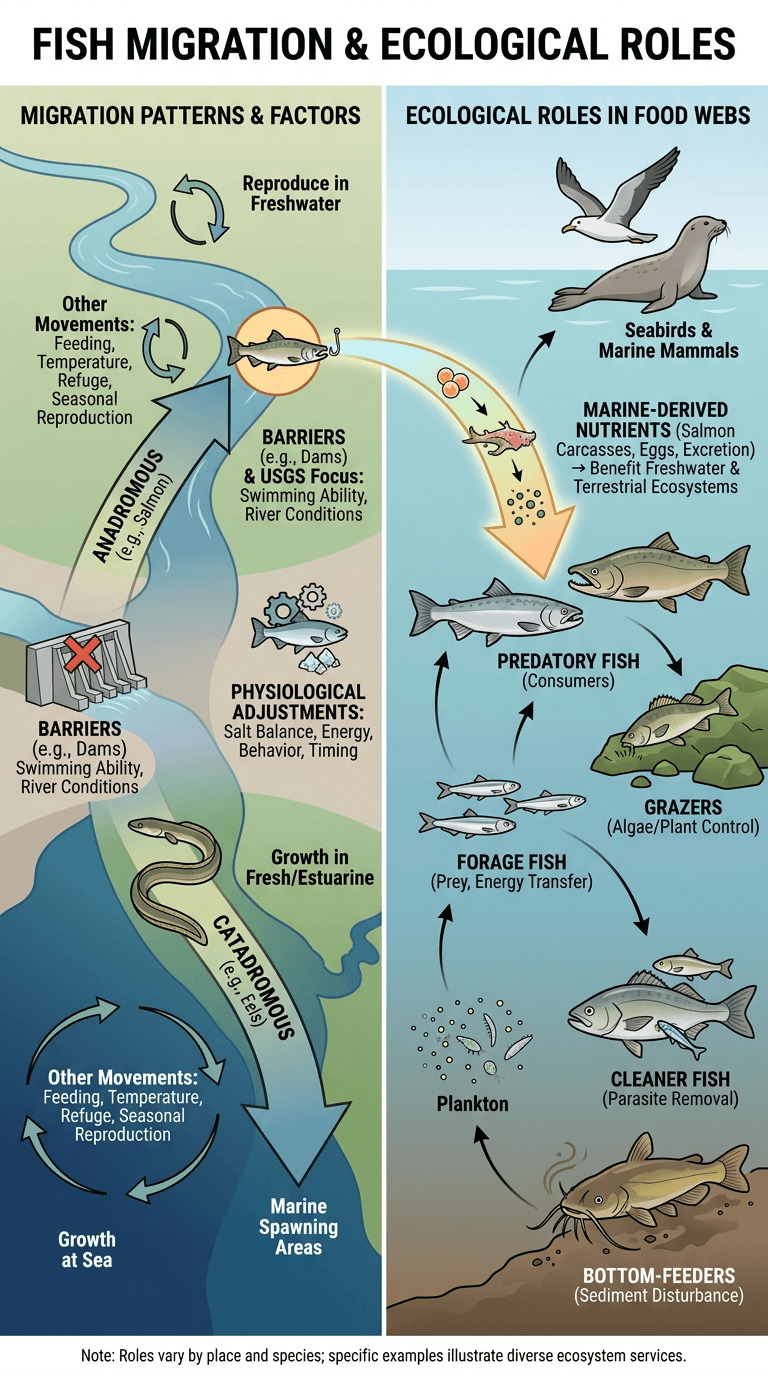
Freshwater-ocean migrations and other movement patterns
Fish migrations can occur entirely within rivers, entirely within oceans, or between fresh water and salt water. Anadromous fishes such as many salmon grow largely at sea and migrate into fresh water to reproduce. Catadromous fishes such as freshwater eels move in the opposite broad direction, growing mainly in fresh or estuarine waters before migrating toward marine spawning areas. Other species move for feeding, temperature, refuge, or seasonal reproduction.
Migration depends on physiology as well as navigation. Fish may need to adjust salt balance, energy use, behavior, and timing while moving between habitats. The U.S. Geological Survey’s work on migratory fishes emphasizes how swimming ability, behavior, physiology, river conditions, and barriers such as dams can determine whether fish complete their journeys.
Fish as predators, prey, grazers, cleaners, and nutrient movers
Fish occupy many positions in aquatic food webs. Small forage fishes transfer energy from plankton to larger fishes, seabirds, and marine mammals. Predatory fishes consume other animals, while herbivorous and algal-feeding species can influence plant and algal communities. Cleaner fishes remove ectoparasites or tissue from client animals, and bottom-feeding fishes can disturb sediments while foraging.
Migratory fishes can also connect ecosystems. Salmon that return to rivers bring marine-derived nutrients into freshwater and nearby terrestrial food webs through eggs, excretion, predation, and carcasses. These effects vary by place and species, so it is better to describe particular ecological roles than to claim that every fish performs the same ecosystem service.
Fish Conservation in Brief
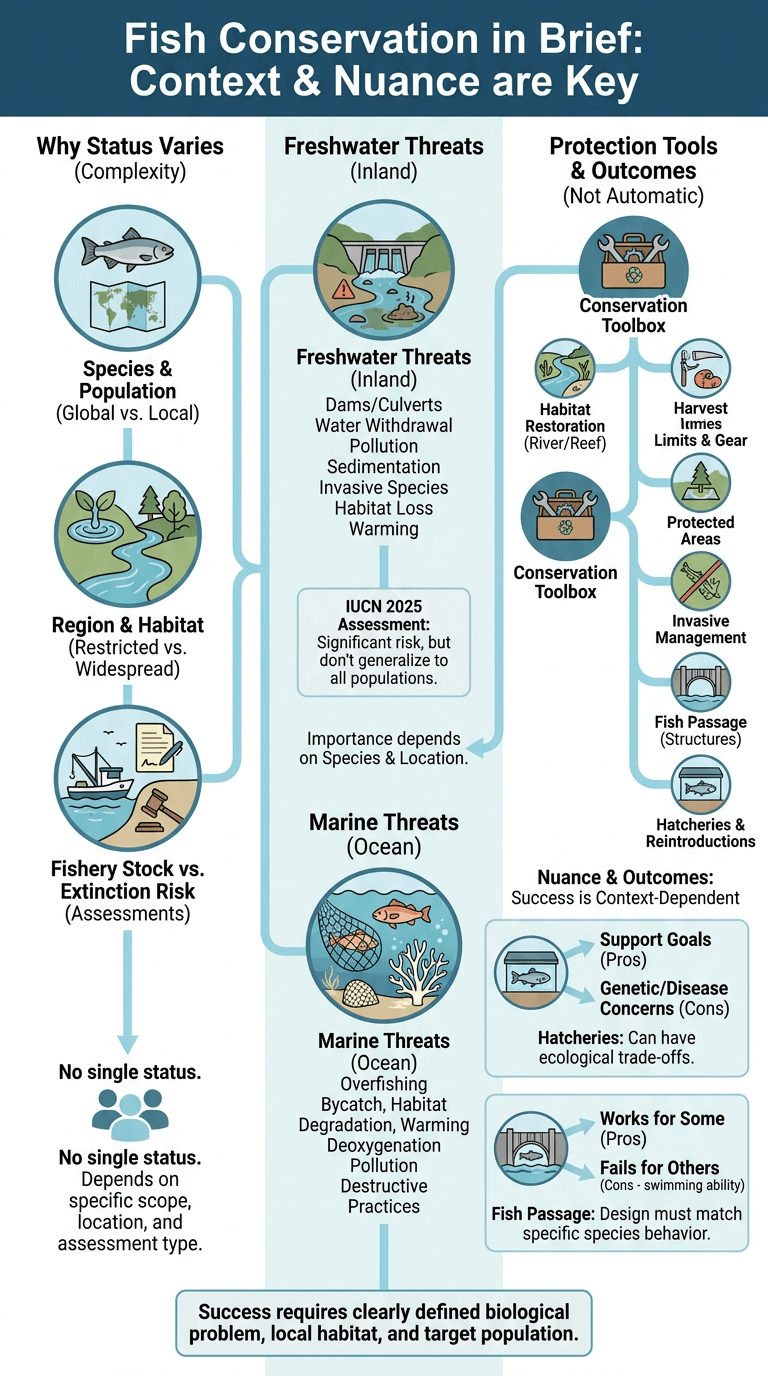
Why status varies by species, population, region, and fishery
There is no single conservation status for “fish.” A species may be widespread globally yet declining in part of its range, while another may be naturally restricted to one spring, cave, island, or river basin. Fisheries assessments can also evaluate particular stocks rather than extinction risk for an entire species, and legal protections may apply only in certain countries or jurisdictions.
Freshwater threats and marine threats
Freshwater fishes can be affected by dams, culverts, water withdrawals, pollution, sedimentation, invasive species, altered flow, habitat loss, warming, and disconnection from floodplains or spawning areas. Marine fishes can face overfishing, bycatch, habitat degradation, warming, deoxygenation, pollution, destructive practices, and changes in food availability. The importance of each threat depends on the species and location.
The IUCN’s 2025 global freshwater assessment found substantial extinction risk among assessed freshwater fishes and highlighted pollution, habitat modification, water extraction, overharvest, invasive species, and disease as major pressures. That result should not be generalized into a claim that all freshwater fish populations are declining in the same way.
Protection tools without oversimplifying outcomes
Fish conservation can involve habitat restoration, environmental flows, fish passage, dam removal where appropriate, spawning-ground protection, water-quality improvement, invasive-species management, harvest limits, gear changes, bycatch reduction, protected areas, monitoring, captive breeding, and carefully planned reintroductions. None is automatically effective everywhere.
For example, hatcheries may support selected recovery or fishery goals, but they can also raise genetic, disease, ecological, and competition concerns. Likewise, a fish passage structure that works for one species may fail for another with different swimming ability or behavior. Conservation succeeds best when the biological problem, local habitat, and target population are clearly defined.
Common Fish Myths and Misunderstandings
Not all fish have scales, swim bladders, or the same gill pattern
Scales are common but not universal. Catfishes can have naked skin or bony plates instead of typical overlapping scales, and hagfishes lack ordinary fish scales. Swim bladders are also absent in many fishes, including sharks and rays, and reduced or missing in some bony fishes. Gill anatomy varies among teleosts, sharks and rays, lampreys, and other lineages.
Not all fish lay eggs or form schools
Many fishes lay eggs, but live-bearing occurs in multiple lineages. Fertilization can be external or internal, and embryos can receive nutrition in different ways. Social behavior is just as varied. Some species school tightly, others form loose shoals, and many are solitary, territorial, or social only during feeding or reproduction.
Sharks are fish; whales, dolphins, jellyfish, and starfish are not
Common names can be misleading. Sharks and rays are cartilaginous fishes. Whales and dolphins are mammals that breathe air with lungs, nurse their young, and descended from land-mammal ancestors. Jellyfish are cnidarians, while starfish are echinoderms. Neither is a vertebrate fish despite the word “fish” in the common name.
Fish can hear and have far more than a three-second memory
Fish do not need external ears to detect sound. Their inner ears sense particle motion, and in some species the swim bladder or specialized bones improve sensitivity to sound pressure. The lateral line adds information about nearby water movement, but it is a different sensory system from hearing.
The claim that fish have only a three-second memory is also unsupported. Modern research examines fish learning, navigation, decision-making, and memory across many species. A review of fish cognition research describes evidence across several cognitive domains while also warning that results from laboratory studies do not automatically represent every wild fish species.
Questions That Build on Basic Fish Biology
How fish are defined and classified
Once the broad picture is clear, two deeper questions naturally follow: what makes an animal a fish, and how should living fishes be divided into major lineages? The first question deals with traits, exceptions, and the evolutionary meaning of the word. The second focuses on relationships among jawless fishes, cartilaginous fishes, ray-finned fishes, and the living aquatic members of the lobe-finned lineage.
How fish bodies, physiology, and behavior vary
Fish anatomy, breathing, swimming, senses, feeding, behavior, and reproduction each become more interesting when treated as their own biological problem. The same is true of salt balance. A freshwater trout, marine tuna, shark, lungfish, and mudskipper live in water, but they do not solve oxygen, movement, buoyancy, sensory, or osmotic challenges in identical ways.
How habitat, ecology, migration, and conservation fit together
Where a fish lives affects what it eats, how it moves, when it reproduces, what sensory cues matter, and which threats are important. Migration links habitats across a life cycle, while ecological interactions connect fishes to plankton, invertebrates, plants, other fishes, birds, mammals, reptiles, and people. Conservation decisions make more sense when they begin with those species-specific biological relationships rather than with broad assumptions about “fish” as a single ecological type.
FAQ
Are fish one scientific class?
No. “Fish” is a useful common biological category, but living fishes are spread across multiple evolutionary lineages. Older sources may use “Pisces” as a broad class, but modern phylogenetic classification does not treat all fishes, with tetrapods excluded, as one simple formal class. Tetrapods arose within the broader lobe-finned vertebrate lineage, which makes the everyday fish grouping paraphyletic.
Are sharks fish?
Yes. Sharks are cartilaginous fishes in Chondrichthyes. Their skeletons are predominantly cartilage rather than the extensively ossified skeleton typical of many bony fishes, but that does not make them a separate kind of vertebrate outside fishes. Rays, skates, and chimaeras are also cartilaginous fishes.
Do all fish live underwater all the time?
No. Most fishes are strongly dependent on aquatic conditions, but some species spend substantial periods in air or on exposed surfaces. Mudskippers, lungfishes, labyrinth fishes, and several catfishes and other amphibious species have specialized ways to obtain oxygen or protect respiratory surfaces during emersion. These abilities are species-specific and should not be generalized to ordinary fish.
Final Thoughts
The most useful fish facts are the ones that reveal how much variation hides inside one familiar word. Fishes include jawless, cartilaginous, ray-finned, and lobe-finned lineages with very different bodies, habitats, senses, feeding strategies, reproductive systems, and life histories. Most use gills, many have fins and scales, and many are ectothermic, yet none of those traits works as a perfect universal rule. Understanding fishes means learning the broad patterns while keeping the exceptions in view. That approach makes their anatomy, behavior, migration, ecology, and conservation far easier to understand without flattening tens of thousands of species into one generic fish model.

Ethan Walker is the founder and research editor of Animal Fact Central. He creates and reviews educational animal facts content using trusted wildlife, pet care, and science-based sources. His work focuses on making animal behavior, adaptations, habitats, and species facts clear, accurate, and engaging for everyday readers.
Read More Details About Ethan Walker: https://animalfactcentral.com/ethan-walker/