Why Are Carnivorans Important? Ecosystem Roles

Why Are Carnivorans Important? Predators, Scavengers, and Ecosystem Roles

Carnivorans matter in ecosystems for far more reasons than simply eating other animals. Members of the mammalian order Carnivora can act as large predators, mid-level predators, scavengers, omnivores, seed dispersers, diggers, nutrient movers, and aquatic consumers. The importance of any one role depends on the species, its abundance, the habitat, available food, competitors, and the … Read more

Carnivoran Habitats: Where Carnivorans Live

Where Do Carnivorans Live? Habitats and Survival Adaptations

Carnivorans live in an unusually broad range of environments. Members of the mammalian order Carnivora occur in tropical forests, temperate woodlands, grasslands, deserts, mountains, tundra, rivers, wetlands, coastlines, Arctic sea ice, and the open ocean. That range includes familiar land mammals such as cats, dogs, bears, raccoons, mongooses, and skunks, as well as semi-aquatic otters … Read more

Carnivoran Senses: Smell, Hearing, Vision & Whiskers

Carnivoran Senses: Smell, Hearing, Vision, and Whiskers

Carnivoran senses are not built around one universal superpower. Cats, dogs, bears, mustelids, hyenas, raccoons, seals, and their relatives solve very different sensory problems, so they do not rely on smell, hearing, vision, or touch in exactly the same way. A stalking cat benefits from detecting faint movement in dim light. A canid following a … Read more

How Carnivorans Communicate: Scent, Sound & Signals

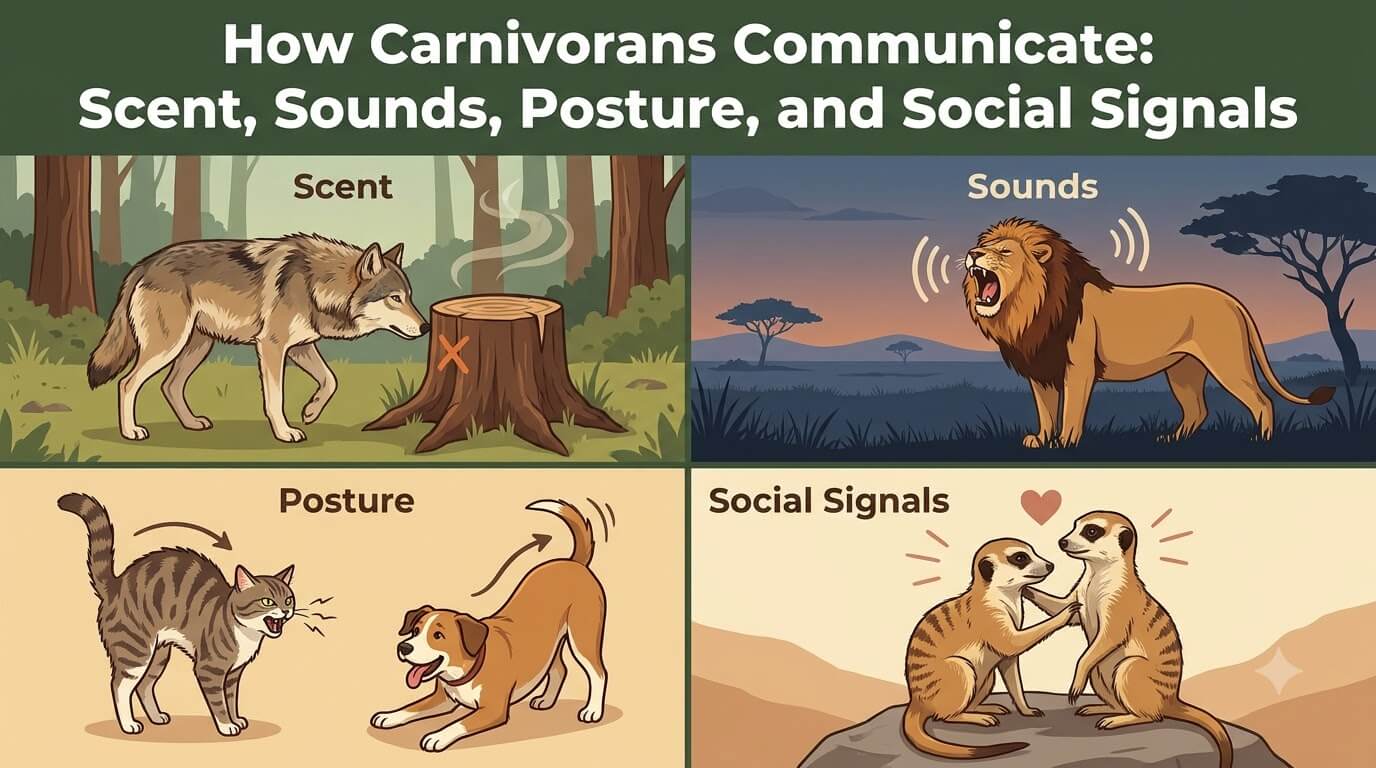
How Carnivorans Communicate: Scent, Sounds, Posture, and Social Signals

Carnivorans communicate through more than howls, roars, growls, and barks. Members of the order Carnivora also exchange information with scent, facial expression, ear and tail position, body posture, touch, and combined signals. A solitary cat scent-marking, a wolf pack howling, a spotted hyena pasting odor onto grass, and a sea lion mother calling to her … Read more

How Carnivorans Hunt and Forage: Strategies Explained

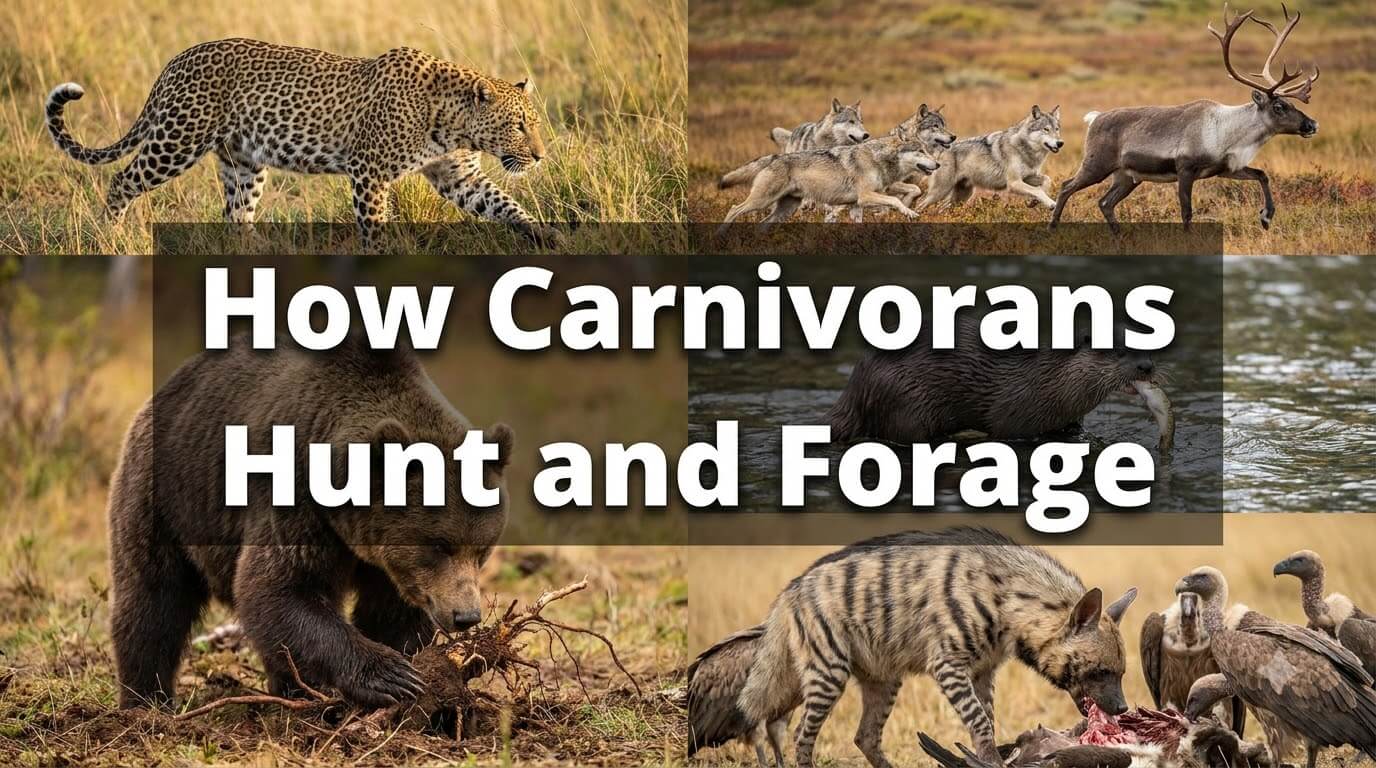
How Carnivorans Hunt and Forage: Ambush, Pursuit, Digging, Fishing, and Scavenging

Carnivorans use far more feeding strategies than the familiar image of a big predator chasing prey. Some cats stalk and ambush. Wolves can pursue large prey cooperatively. Bears dig, graze, pick berries, catch fish, and search for insects. Raccoons probe and manipulate objects. Sea otters dive for bottom-dwelling invertebrates. Pinnipeds pursue prey underwater. Giant pandas … Read more

What Do Carnivorans Eat? Diet Diversity Explained

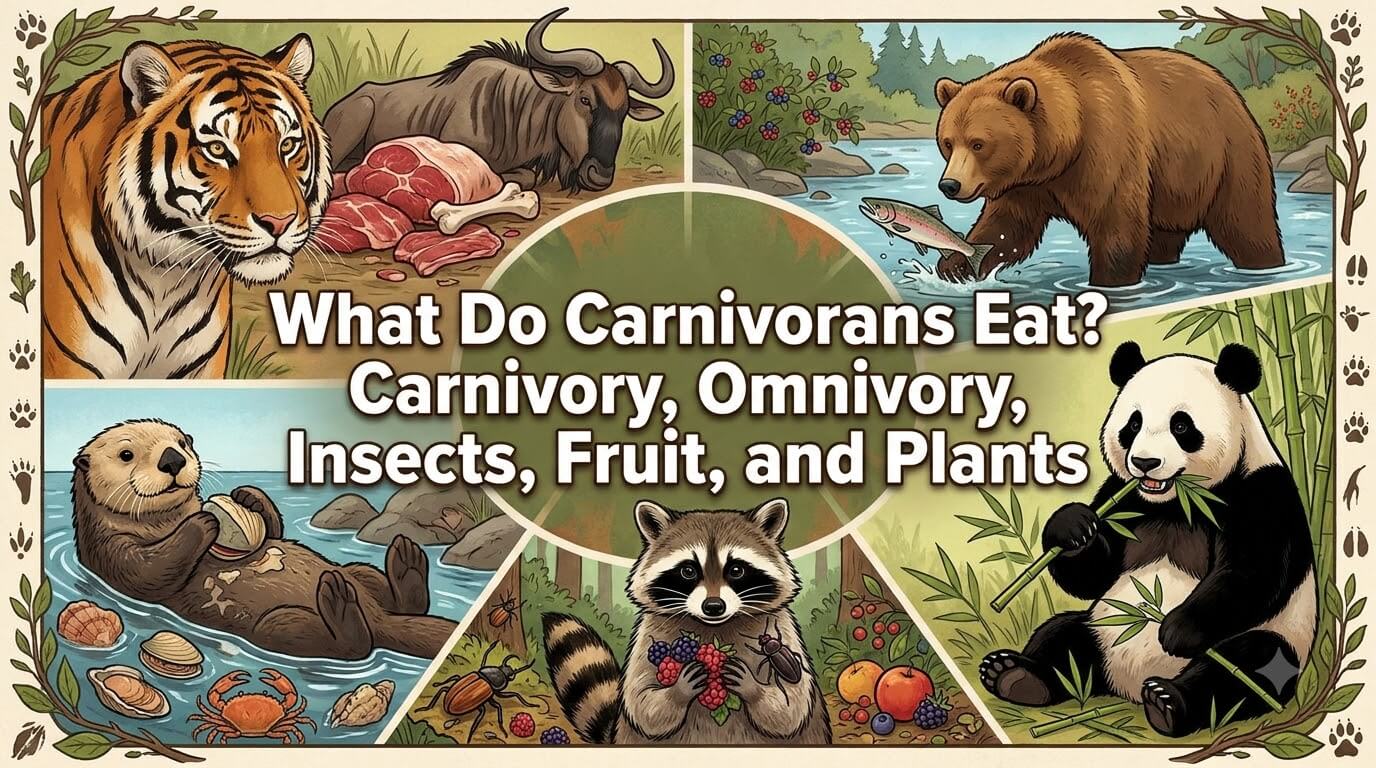
What Do Carnivorans Eat? Carnivory, Omnivory, Insects, Fruit, and Plants

Carnivorans do not all eat the same kind of food. The mammalian order Carnivora includes strongly meat-specialized cats, flexible canids, bears that range from seal-eating polar bears to bamboo-specialized giant pandas, fruit-eating or omnivorous procyonids and viverrids, insect-eating mongooses, fish-catching otters, and marine pinnipeds that feed on many kinds of ocean prey. That diversity is … Read more

Caniformia: Dogs, Bears, Seals, Otters & Relatives

Caniformia Explained: Dogs, Bears, Seals, Otters, and Relatives

Caniformia is one of the two major living branches of the mammalian order Carnivora. The name literally points toward a “dog-like” branch, but that label can be misleading if taken too literally. Caniforms include dogs and foxes, yet they also include bears, red pandas, raccoons, skunks, weasels, otters, seals, sea lions, and walruses. Some run … Read more

Feliformia: Cats, Hyenas, Mongooses & Civets

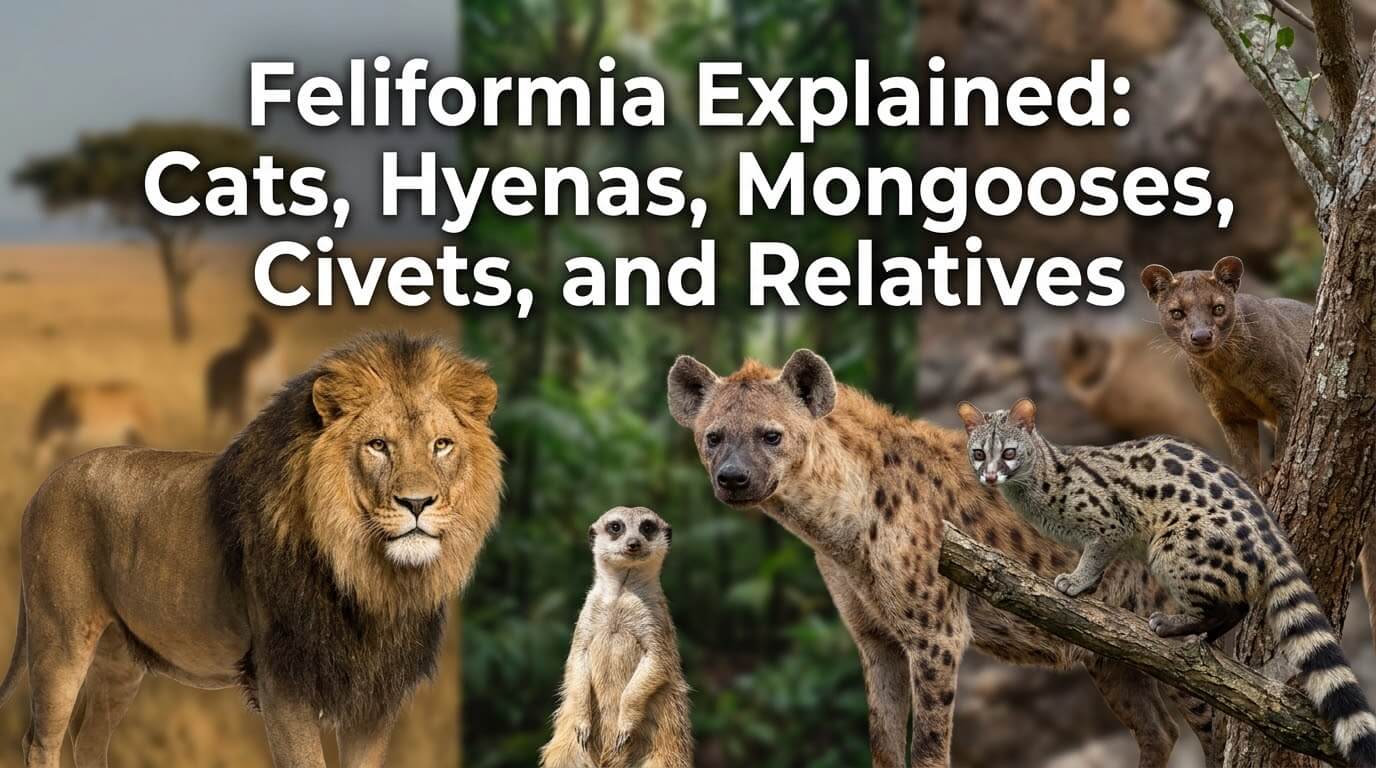
Feliformia Explained: Cats, Hyenas, Mongooses, Civets, and Relatives

Feliformia is one of the two major living branches of the mammalian order Carnivora. It includes the cat family, but it also includes hyenas, mongooses, Malagasy carnivorans, civets, genets, Asian linsangs, and the African palm civet. That makes Feliformia much broader than the familiar phrase “cat-like carnivorans” can suggest. The members of this branch share … Read more