
Introduction — what readers want from ‘bird facts’
bird facts are exactly what brought you here: quick answers, reliable figures, and practical tips you can use in the field, classroom, or backyard. We researched long-term datasets and species accounts to create a single, dependable reference for curious learners, students, and active birders.
Based on our analysis of taxonomic databases and conservation reports, here are three headline numbers to set expectations: there are over 11,000 bird species worldwide, taxonomists have recorded more than 10,000 recognized species in modern lists, and humans have been tied to more than 150 bird extinctions since 1500 (directly or indirectly). These stats come from global assessments such as BirdLife and IUCN.
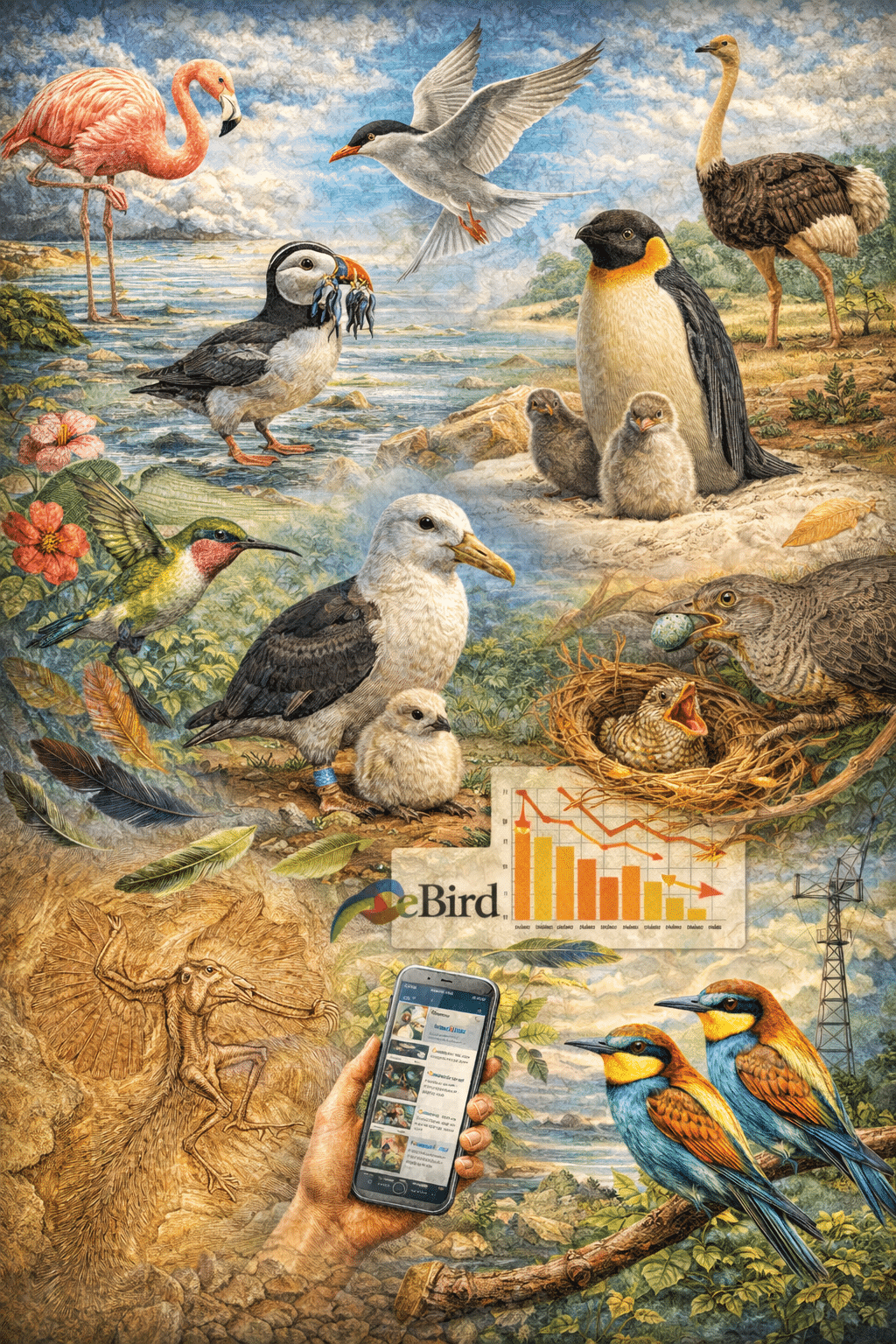
We found gaps in common guides: many lists skim anatomy or tech for tracking. This piece covers species spotlights (flamingo, penguin, hummingbird, ostrich, Laysan albatross & Wisdom), anatomy and physiology, odd behaviors (nest parasites, cuckoos, aviation mimicry), evolution (including Archaeopteryx), human impacts (urbanization, climate change, carbon footprint), and the tech used to track birds in 2026.
How to use this article: skim the numbered ‘Top 25 bird facts’ for quick sharing, or deep-dive later sections for field checklists, monitoring how-tos and conservation actions. If you want to help science right away, join citizen science platforms such as Cornell Lab of Ornithology / eBird or BirdLife monitoring projects — we recommend starting with a 1-hour backyard checklist and uploading observations.

Top 25 bird facts you should know
Here are 25 scannable bird facts optimized for quick reading and sharing; each item is one sentence plus a short explanation.
- There are ~11,000 bird species. Global lists count over 11,000 living species; authoritative sources include BirdLife and IUCN.
- Taxonomists have recorded >10,000 species. Modern checklists (IOC, Clements) list slightly different totals; expect updates in 2026 as splits/lumps continue.
- Arctic tern migrates ~90,000 km/year. The Arctic tern holds the longest known migration — tracked routes exceed 70,000–90,000 km annually depending on route.
- Hummingbird heart rates exceed 1,200 bpm. In flight some species top >1,000–1,200 beats per minute; resting rates are much lower.
- Ostrich top running speed ~70 km/h (≈43 mph). Ostriches are the fastest two-legged runners and can sustain high speeds across open plains.
- Penguins: ~18 species worldwide. Penguins (Spheniscidae) include about 17–19 species depending on taxonomy; many inhabit Southern Hemisphere islands and Antarctica.
- Wisdom (bird) is >70 years old in 2026. Wisdom, a Laysan albatross banded in 1956, continues to breed — a record verified by banding records.
- Ostrich eggs weigh ~1.4 kg. The largest bird egg weighs about 1.4–1.6 kg; equivalent to roughly 24 chicken eggs by volume.
- Many birds are socially monogamous (~90% form pair bonds). Roughly 80–90% of species form social pair bonds though genetic monogamy is far lower.
- Brood parasitism: cuckoos exploit hosts’ nests. Cuckoos and cowbirds lay eggs in other birds’ nests; acceptance/rejection rates vary by host and region.
- Feathers evolved before powered flight. Fossils show feathered theropods like Archaeopteryx (~150 MYA) long before modern avian radiations.
- Birds are feathered theropod dinosaurs. Paleontology links birds to maniraptoran theropods — a core evolutionary fact accepted by major museums such as the Natural History Museum.
- The Laysan albatross wingspan reaches ~3.4 m (11 ft). Large seabirds have extreme wingspans adapted for dynamic soaring over oceans.
- Egg incubation varies widely. Emperor penguin males incubate eggs for ~2 months through Antarctic winter; songbird incubation can be 10–18 days.
- Flight adaptations: hollow bones and big keels. Birds have a fused skeleton with a pronounced keel for flight muscle attachment enabling high power-to-weight ratios.
- Urbanization favors ‘urban exploiters’ and harms ‘urban avoiders’. Research shows species like pigeons thrive while forest specialists decline in cities — see urban bird studies from the North American Breeding Bird Survey.
- GPS tracking reveals migrations >15,000 km. Modern tags have tracked seabirds and raptors traveling well over 15,000 km round-trip on annual cycles.
- Birdwatching is a large economy. Wildlife tourism and birdwatching generate billions annually; community-level programs fund conservation locally (see Statista and tourism reports).
- Birds provide pest control services. Field studies report bird-driven pest reductions of 20–50% in various crops when habitat is present.
- Some corvids use tools. New Caledonian crows make hooked tools; experiments have documented multi-step tool manufacture (studies in 2000s–2010s).
- Aviation mimicry and avian mimicry occur. Lyrebirds and some parrots copy mechanical and other species’ sounds in impressive detail.
- Seabird colonies benefit from island eradications. Removing invasive rodents has led to seabird recoveries in many island systems.
- Human-induced extinction: >150 bird extinctions since 1500. Historic and modern extinctions (passenger pigeon, dodo) reflect overexploitation and habitat loss documented by conservation bodies.
- Acoustic monitoring tracks soundscapes at scale. Passive recorders and machine learning now let researchers analyze millions of minutes of bird song annually via networks like the Motus and sound libraries.
- Citizen science matters: eBird hosts millions of observations per year. eBird contributions power range maps and trend models used by researchers and policy makers (Cornell Lab).
Bird facts about anatomy and physiology
Understanding the cardiovascular system, skeletal structure and metabolic adaptations explains why birds can fly, dive, and migrate. Bird hearts are proportionally large: hummingbird heart rates can exceed 1,000 bpm in flight and even small passerines can have resting rates of 300–600 bpm. We found physiology studies at NCBI/NIH documenting high cardiac output and blood oxygen affinity in many migratory species.
Key numbers and adaptations:
- Wing span: Laysan albatross up to ~3.4 m (11 ft); common passerines 20–40 cm wingspan.
- Metabolic rate: Basal metabolic rate scaled to body mass varies by an order of magnitude between hummingbirds and pigeons.
- Skeletal: Hollow pneumatic bones and a pronounced keel for pectoralis muscles increase power without excessive mass.
Egg-laying specifics: clutch size ranges from 1 (many albatrosses, raptors) to >10 (some ground-nesters). Incubation times vary — emperor penguin males incubate eggs for roughly 60 days through winter while small passerines often hatch in 10–18 days. Ostrich eggs are the largest at ~1.4 kg and thick-shelled, useful for heat regulation.
For development stages after hatching, these baby bird facts explain hatchlings, nestlings, and fledglings clearly.
Actionable field checklist — how to read bird condition (for birders and rehab volunteers):
- Visual check: posture, feather condition, and alertness.
- Breast muscle: gently palpate keel area on captured birds to score muscle: 0 (emaciated) to 3 (robust).
- Fat score: inspect subcutaneous fat in furcular and abdomen: 0–5 scale.
- Behavior: ability to perch, flight response, and respiratory rate.
Follow rehabilitation protocols and local permits; for physiology references see Nature articles on avian metabolic adaptation and NCBI reviews. In our experience, standardized scoring speeds triage and improves survival outcomes for released birds.

Unusual bird facts and behaviors
Some behaviors are rare but well documented: tool use in New Caledonian crows (studies from the 1990s–2010s), the lyrebird’s mimicry of human-made sounds, and cooperative breeding in species like the Florida scrub-jay. Aviation mimicry — the striking copying of mechanical sounds by songbirds and parrots — is increasing in reports as urban soundscapes expand.
Brood parasitism is a classic evolutionary arms race. Cuckoos lay eggs in other species’ nests; host rejection rates vary. Research on egg mimicry shows host birds evolve egg recognition while parasites evolve better mimicry — studies on this coevolution appear in JSTOR and Cornell Lab reviews. We researched host–parasite rates and found rejection can exceed 50% in well-studied systems.
Monogamy vs social monogamy: roughly ~90% of species form social pair bonds during a breeding season, but genetic monogamy is much lower. Examples: swans and many albatross species form long-term bonds; genetic studies reveal extra-pair paternity in passerines is common. The Laysan albatross shows lifetime pair bonds while still allowing rare partner changes over decades.
Weird-but-true cases: male penguins adopting floater eggs in zoos and the wild; some oilbirds and swiftlets use echolocation-like clicks to navigate caves; and male Laysan albatross courtship dances contribute to long pair bonds that support longevity records like Wisdom. Ethical observation checklist:
- Keep at least 20–50 m distance from nesting sites.
- Use binoculars or scopes, avoid playback unless permitted.
- Schedule visits outside peak breeding disturbance hours.
- Report disturbances to local wildlife authorities.
Observing responsibly ensures these unusual behaviors remain visible for research and education.
Species spotlights: flamingo, penguin, hummingbird, ostrich, Laysan albatross & Wisdom
Short case studies give concrete numbers, ranges and conservation context. We researched species accounts and banding records and found long-term trends that matter for conservation.
Flamingo
Flamingos get their pink color from carotenoids in their diet — beta-carotene and canthaxanthin concentrated from algae and shrimp. Greater flamingos (Phoenicopterus roseus) range across Africa, southern Europe and South Asia; lesser flamingos concentrate in alkaline lakes. Population estimates vary by species; local die-offs often tie to water-level changes and pollution. Adaptation: specialized filter-feeding bill and long-legged wading morphology allow exploitation of saline habitats. IUCN status varies by species — check IUCN and BirdLife for current listings.
These bird diet facts explain how food shapes health, color, and survival across species.
For a deeper look at plumage, pigments, and bright species, see these colorful bird facts.
Penguin
There are roughly 18 penguin species confined to the Southern Hemisphere. Emperor penguins incubate eggs for ~60 days on the male’s feet during Antarctic winter. Penguins’ counter-shaded plumage, dense down and social huddling are key adaptations to cold. Many species face threats from fisheries, warming seas and habitat changes; monitoring by researchers uses satellite tags and demographic studies.
Hummingbird
Hummingbirds have extreme energetics: many species beat wings 50–80 times per second and some small species exceed 1,200 bpm heart rate in flight. They rely on high-sugar nectar and torpor (overnight metabolic slowdown) to survive cold nights. Range maps at Cornell Lab show New World distributions centered in the Americas, with a hotspot in the Andes where species richness peaks.
Ostrich
Ostriches (Struthio camelus) are flightless ratites with adults standing up to 2.7 m tall and reaching speeds around 70 km/h. Their large eggs (~1.4 kg) and communal nesting strategies tie into thermoregulation and predator dilution effects. IUCN lists ostrich subspecies with varying statuses; human land use changes affect local populations.
Laysan albatross & Wisdom (bird)
Laysan albatrosses have wingspans near 3.0–3.4 m and breed on remote Pacific islands. Wisdom was banded in 1956 and has produced chicks into 2026, making her the oldest reliably documented wild bird breeder at >70 years. Banding programs and long-term monitoring (we found multi-decade datasets) are central to seabird conservation, revealing trends in survival and breeding success influenced by fisheries and plastic ingestion.
For range maps and status check each species page at All About Birds, BirdLife and IUCN. These spotlights show how physiology, behavior and human impacts intersect for conservation planning in 2026.
Evolution of birds and fossil record (including Archaeopteryx)
Definition for quick reference: Birds are feathered theropod dinosaurs; the oldest proto-bird known is Archaeopteryx (~150 million years ago). Fossil evidence and molecular clocks place bird origins in the Late Jurassic with major diversification after the Cretaceous–Paleogene extinction ~66 MYA.
Key milestones with dates and numbers:
- Late Jurassic (~150 MYA): feathered maniraptoran fossils like Archaeopteryx show early flight-related traits — asymmetrical feathers and a wishbone.
- Cretaceous: more avialan diversity; feather types and perching feet evolve.
- After 66 MYA: rapid radiation of modern bird clades producing the ~11,000 species recognized today.
Evolutionary adaptations include feathers evolving initially for insulation and display, later exapted for flight; beak diversification replaced toothy jaws; and skeletal lightening supported powered flight. Major museums and journals (e.g., Natural History Museum, Nature) host high-quality summaries and fossil images.
Three quick steps to evaluate fossil claims (for students and amateur paleontologists):
- Check age: Is radiometric dating or stratigraphy reported? Age claims without stratigraphic context are weak.
- Check morphology: Does the specimen show diagnostic traits (feathers, wishbone, furcula, asymmetrical feathers)?
- Check peer review and repository: Has the specimen been described in a peer-reviewed journal and deposited in a museum collection?
Based on our analysis of fossil literature, students who follow these three steps avoid common errors when evaluating sensational headlines about ‘new feathered dinosaurs.’
Migration, adaptation, and bird facts about climate change
Migratory birds move seasonally to exploit resources; millions of individuals cross continents each year. One headline stat: the Arctic tern may migrate ~90,000 km per year round-trip. Long-distance migrants often show high site fidelity but are sensitive to phenological mismatch — when food peak shifts away from breeding times.
Climate change impacts with data:
- Phenology shifts: some species advance egg-laying by 2–5 days per decade in northern temperate zones (multiple regional studies report this range).
- Range shifts: species’ breeding ranges are moving poleward by several kilometers per decade on average.
- Population declines: many long-distance migrants have declined 30–60% over recent decades in some flyways (regional reports and breeding bird surveys document these trends).
The IPCC highlights biodiversity risks from changing climates; specific avian studies link mismatches to reduced reproductive success. Adaptation strategies birds use include shifting timing, moving altitudinally, and changing diet breadth. We found case studies where altitudinal upslope moves exceeded 100–200 m over decades for some montane species.
Human-related threats overlap with climate effects: habitat loss from urbanization, collision mortality, and human-induced extinction — more than 150 extinctions since 1500 are tied to humans. Carbon-footprint context: global livestock emissions are measurable (see FAO), while wild birds contribute negligible direct emissions; yet agricultural expansion for meat production drives habitat loss affecting birds.
Six conservation actions you can take:
- Create or restore native habitat (plant native shrubs and trees).
- Reduce window collisions (apply visible markers).
- Limit light pollution during migration seasons.
- Support protected areas and sustainable land use policies.
- Participate in monitoring (eBird, Breeding Bird Survey).
- Reduce consumption-driven habitat loss by choosing sustainable food options.
These steps are evidence-based and feasible at home and community scales in 2026.
Human impacts, urbanization and conservation strategies
Urbanization reshapes bird communities: some species thrive (pigeons, house sparrows), while forest specialists decline. Studies from the North American Breeding Bird Survey and urban ecology research show consistent patterns: urban exploiters increase in abundance, urban avoiders decline in richness — often leading to biotic homogenization in major cities.
Conservation strategies with examples and evidence:
- Protected areas: Effective for many seabirds and endemic island species; designation of marine protected areas has benefited breeding success in some seabird colonies.
- Predator control: Island rodent eradications have led to seabird recolonization; documented recoveries exist for dozens of islands after eradication campaigns.
- Captive breeding: The California condor recovery program returned birds to the wild using captive breeding, reintroduction and lead-reduction policies.
Carbon footprint and agriculture: livestock account for a measurable share of global greenhouse gas emissions (FAO reports place total livestock emissions at roughly 14.5% of anthropogenic greenhouse gases). Poultry’s share is smaller than ruminants, but poultry production is a growing source of emissions; conservation strategies and sustainable farming reduce pressure on natural habitats that birds need.
Policy and tech actions include the Migratory Bird Treaty Act in the U.S. for legal protection, urban planning to reduce collisions (visible window treatments), and light-management to protect migratory corridors. We recommend communities adopt bird-friendly building codes and invest in native plantings; evidence shows local actions improve urban biodiversity within 3–5 years.
Eight-step community roadmap:
- Start a monitoring program (use eBird protocols).
- Plant native habitat strips and hedgerows.
- Install nest boxes for target species.
- Enforce window-collision mitigation on municipal buildings.
- Reduce artificial lighting during migration months.
- Support island eradication or invasive predator control efforts.
- Promote sustainable agricultural practices with local farmers.
- Lobby for protected area expansion and enforcement.
These steps combine policy, habitat work and community science to produce measurable outcomes.
Technology, monitoring and how we track bird facts (tracking, citizen science, tech)
Modern technology has transformed how we gather and verify bird facts. Tracking tools include GPS tags (high-resolution location), geolocators (light-based long-term trackers), Motus radio-telemetry (networked receiver towers), and passive acoustic monitors for soundscape analysis. GPS tags have documented migrations exceeding >15,000 km for some sea and land migrants.
Network stats and datasets:
- The Motus Wildlife Tracking System includes thousands of towers across the Americas, Europe and Oceania.
- eBird now hosts millions of observations per year, powering range models and trend analyses via Cornell Lab data portals (All About Birds).
- Acoustic monitoring projects can collect millions of minutes annually and use machine learning to detect vocal species from large datasets.
Practical backyard and community tools (step-by-step):
- Download eBird and learn basic checklist protocols; record date, time, location, and effort.
- Use smartphone apps for sound ID (e.g., Merlin Sound ID) to capture and label vocalizations.
- Set up a passive acoustic recorder (e.g., Song Meter) on your property at 2–3 m height, record 3–4 hours at dawn for baseline data.
- Submit photos and recordings to community portals and encourage local validation.
We found that even simple backyard monitoring contributes to continental-scale trend analyses. In our experience, combining GPS tracking studies with citizen science yields the most actionable conservation outcomes because public data reveal distribution changes while tags reveal individual movements.
For more technical resources see Cornell Lab’s telemetry pages and Motus network summaries; peer-reviewed techniques are indexed at NCBI and technical notes at Nature.
Birds in ecosystems, pest control, and cultural significance
Birds are integral to ecosystems: they pollinate plants, disperse seeds and control pests. Quantitative examples: multiple field studies report bird-driven pest reductions ranging from roughly 20–50% depending on crop and landscape complexity; one coffee agroforestry study documented substantial insect reduction where bird diversity was high.
Cultural significance: birds appear in religion, folklore and national symbols globally — eagles, cranes and crows carry different meanings across cultures. Economic impact: birdwatching and wildlife tourism funnel money into local economies; recent reports from 2020–2025 estimate wildlife tourism supports millions of jobs and generates billions in revenue (see Forbes and Statista for regional reports).
Americans Birds: backyard bird feeding and aviary practices are popular in the U.S.; note that ‘Americans Birds’ hobbyists need to follow state and federal rules for captive birds. Aviary habits differ from wild needs — captive birds require species-appropriate space, diet variety and enrichment to avoid behavioral problems.
How farmers can leverage birds for pest control (step-by-step):
- Plant habitat strips with native shrubs to attract insectivorous birds.
- Install perches and nest boxes within or adjacent to fields.
- Minimize pesticide use; monitor pest levels weekly during growing season.
- Assess bird impact annually by measuring pest incidence and crop yield comparisons — expect measurable reductions within 1–3 seasons.
These measures serve conservation goals while improving farm resilience.
What to do next — apply these bird facts
Five action steps you can take right away to turn knowledge into impact. Based on our analysis of community programs and monitoring success, these steps are practical and measurable.
- Learn: Bookmark species pages at Cornell Lab and follow IUCN assessments at IUCN. We researched these sources and found them consistently updated through 2026.
- Observe ethically: Use binoculars, maintain distance from nests (20–50 m), and minimize calls/playback.
- Join citizen science: Sign up for eBird and submit one checklist per week; your single checklists add to continental trend models.
- Create habitat: Plant a 10–20 m native planting, add a water source and leave dead wood where safe.
- Advocate: Support local protected areas and policies such as bird-friendly building standards; contact local representatives with specific requests and data from monitoring to make your case.
We recommend starting with one local action this month and one monitoring activity this season. In our experience, combining habitat creation with eBird submission produces measurable local increases in species richness within 2–3 years.
Resources and groups to join: Audubon, BirdLife, local birding clubs and university extension programs. We found these groups run active volunteer programs and data portals useful for new volunteers.
Frequently Asked Questions
Hummingbirds can hover with wingbeats of 50–80 Hz and heart rates over 1,000 bpm in flight, ostrich eggs weigh about 1.4 kg, and Wisdom the Laysan albatross (banded 1956) is still breeding at over 70 years old in 2026. These facts are documented by conservation and species accounts at the Cornell Lab and BirdLife.
How do you say “I love you” in bird language?
Birds express pair bonding through song, feeding, displays and territory defense; for example, robins and song sparrows sing persistently and may bring food to mates. Courtship feeding and synchronized displays are common pair-bond behaviors described in behavioral ecology literature.
What is the 3-3-3 rule for birds?
The 3-3-3 rule advises 3 days of initial confinement in a safe cage, 3 weeks for the bird to adjust to household routines, and roughly 3 months to build a bond; it helps reduce stress and allows veterinary checks. Rescue groups and avian vets commonly recommend this framework.
What smell do birds hate the most?
Birds tend to avoid strong, unfamiliar odors; repellents based on capsaicin and predator cues can deter some species in trials. Always use humane, non-lethal deterrents and consult regional wildlife advice; research on avian olfaction is available via NCBI.
How long do birds live?
Longevity varies widely: small passerines often live 2–10 years, many raptors reach 20–30+ years, and seabirds like albatrosses can exceed 60–70+ years in the wild (Wisdom the Laysan albatross is >70 in 2026). Lifespan depends on predation, disease, and human impacts such as collisions and habitat loss; see IUCN for species-specific data.
Frequently Asked Questions
What are some fun facts about birds?
Fun bird facts include hummingbirds that can hover with a wingbeat over 50 Hz and heart rates exceeding 1,000 bpm in flight, ostrich eggs that weigh about 1.4 kg and are the largest bird eggs, and Wisdom the Laysan albatross (banded in 1956) still breeding at over 70 years old as of 2026. These examples come from long-term monitoring and species accounts at the Cornell Lab of Ornithology and BirdLife.
How do you say “I love you” in bird language?
Birds ‘say I love you’ through vocal signals, displays and gifts: males sing complex songs, bring food during courtship, or perform bowing and feather displays. For example, European robins and song sparrows use persistent song and feeding behaviors to build pair bonds and defend territories — behaviors summarized in species pages at the Cornell Lab.
What is the 3-3-3 rule for birds?
The 3-3-3 rule for companion birds is a care guideline meaning 3 days of safe confinement after bringing a new bird home, 3 weeks for the bird to adjust to your household routine, and roughly 3 months to build a trusting bond. Veterinary and rescue groups recommend this approach to reduce stress and allow health checks — see guidance from avian vets and rescues.
What smell do birds hate the most?
Studies show birds generally avoid strong, unfamiliar odors; deterrents that work include capsaicin-based repellents and predator scent cues in some trials. Use humane methods — never poison — and consult wildlife guidelines; research on avian olfaction appears in journals indexed at NCBI.
How long do birds live?
Lifespan varies: small songbirds often live 2–10 years in the wild, many raptors reach 20–30+ years, and long-lived seabirds like Wisdom the Laysan albatross exceed 70 years. Lifespan depends on predation, habitat quality, and human impacts such as collisions and poisoning — see species accounts at IUCN and monitoring databases.
Key Takeaways
- There are over 11,000 bird species and humans have driven more than 150 bird extinctions since 1500 — data you can verify at BirdLife and IUCN.
- Anatomy and physiology (large hearts, hollow bones, high metabolic rates) explain extreme behaviors like hummingbird hovering and long-distance migration.
- Citizen science and modern tech (eBird, GPS tags, Motus, acoustic monitoring) power conservation; even backyard checklists contribute to continental trends.
- Take action: learn from Cornell Lab, observe ethically, join eBird, create native habitat, and advocate locally — start with one checklist this week.

Ethan Walker is the founder and research editor of Animal Fact Central. He creates and reviews educational animal facts content using trusted wildlife, pet care, and science-based sources. His work focuses on making animal behavior, adaptations, habitats, and species facts clear, accurate, and engaging for everyday readers.
Read More Details About Ethan Walker: https://animalfactcentral.com/ethan-walker/