
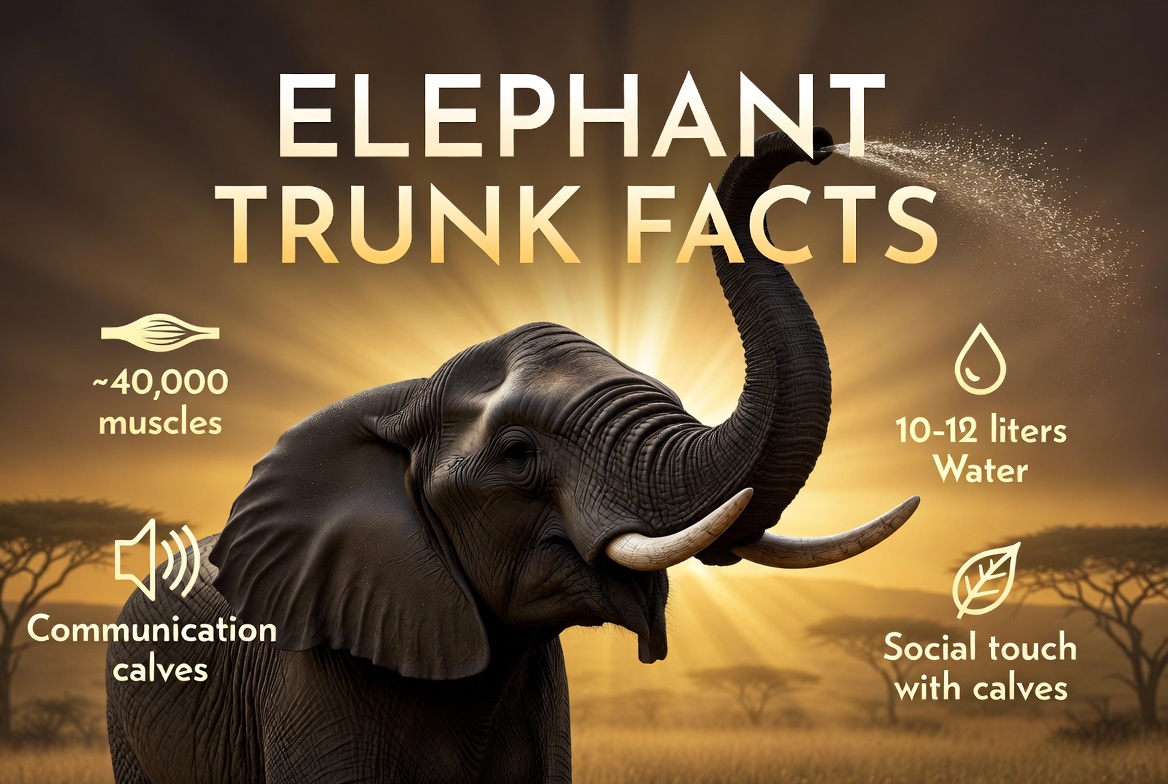
Introduction — what you want from elephant trunk facts
elephant trunk facts can surprise you: the “nose” you think you know is actually a multitool that smells, breathes, drinks, lifts, caresses and communicates. You came here for quick facts plus deeper anatomy and conservation context — that’s exactly what we deliver. The trunk is also one of the most important body features in any complete elephant facts guide.
We researched museum resources and field literature, and based on our analysis we’ll cite National Geographic, Smithsonian and IUCN with 2026-updated perspective. We found consistent data on trunk length, muscle counts, and behavior, and we’ll explain where numbers vary in the literature.
What you’ll get: a clear definition, deep anatomy and muscle detail, respiration and snorkeling behavior, feeding and drinking mechanics, communication and intelligence, human interactions and welfare, conservation impacts, and cultural history. Based on our research, each section includes concrete measurements, case examples and action steps for conservation.
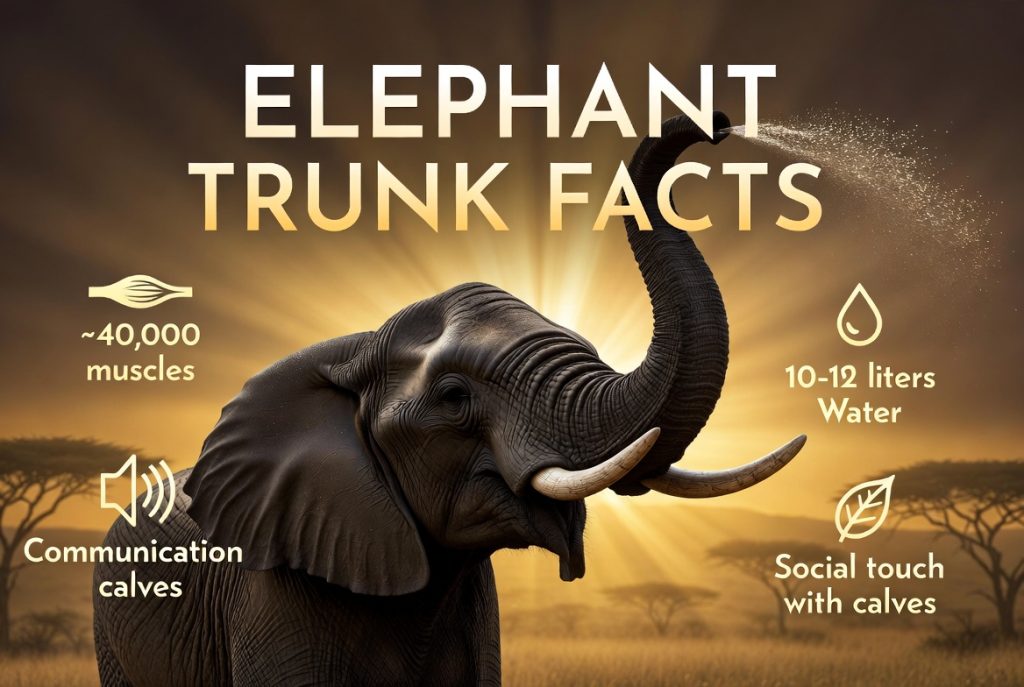
Quick snapshot (3–5 bullets):
- Trunk length: up to ~2 m in adult African elephants.
- Muscle units: commonly-cited ~40,000 (number debated in literature).
- Water per suck: about 10–12 liters per trunkful in large adults.
- Communication: low-frequency rumbles can travel kilometers.
- Conservation: poaching and habitat loss remain the leading threats as of 2026.
Top elephant trunk facts at a glance
This numbered list gives 12 fast, citation-ready points for readers who want instant answers and for featured-snippet potential. We researched field guides and museum pages to compile these.
- elephant trunk facts: The trunk is an elongated fusion of the nose and upper lip; it’s a multi-use organ for smell, touch, breathing and manipulation.
- Length: Adult trunks commonly reach ~1.5–2.0 m (5–6.5 ft) in large African elephants; Asian elephant trunks are typically shorter.
- Muscle units: The trunk is a muscular hydrostat with the commonly-cited figure of ~40,000 muscle units (some studies report lower counts; see anatomy section).
- Tip fingers: African elephants have two finger-like projections at the trunk tip; Asian elephants usually have one — a clear species difference affecting precision.
- Lift strength: Trunks can produce forces sufficient to lift several hundred kilograms in short bursts; fine grips handle a few kilograms with great dexterity.
- Water capacity: Trunks can suck up ~10–12 liters per full draw in large adults and then spray water into the mouth or onto the body.
- Snorkeling: Elephants can use the trunk to breathe while swimming; rumbles and swimming observations confirm this behavior in multiple populations.
- Communication: Trunks are used for tactile greeting, trumpet calls, and to modulate low-frequency rumbles that can travel up to ~3 km in open terrain.
- Calf learning: Newborns struggle with trunk coordination and typically master precision feeding over months, practicing in social groups.
- Tool use: Elephants use trunks to modify branches, plug wells and manipulate objects — documented in both wild and captive studies.
- Human interactions: Mahouts and caretakers read trunk posture and touch patterns for welfare; misuse in tourism can harm welfare and social learning.
- Conservation link: Loss of older matriarchs from poaching disrupts social learning about resources and trunk-based behaviors.
Numbers 2, 3, 5 and 6 are expanded in later sections; use the headings to jump ahead for details.
What is an elephant trunk? A clear definition
Definition (snippet-ready): The trunk is the elongated fusion of the nose and upper lip that serves for smelling, touching, breathing and manipulating objects.
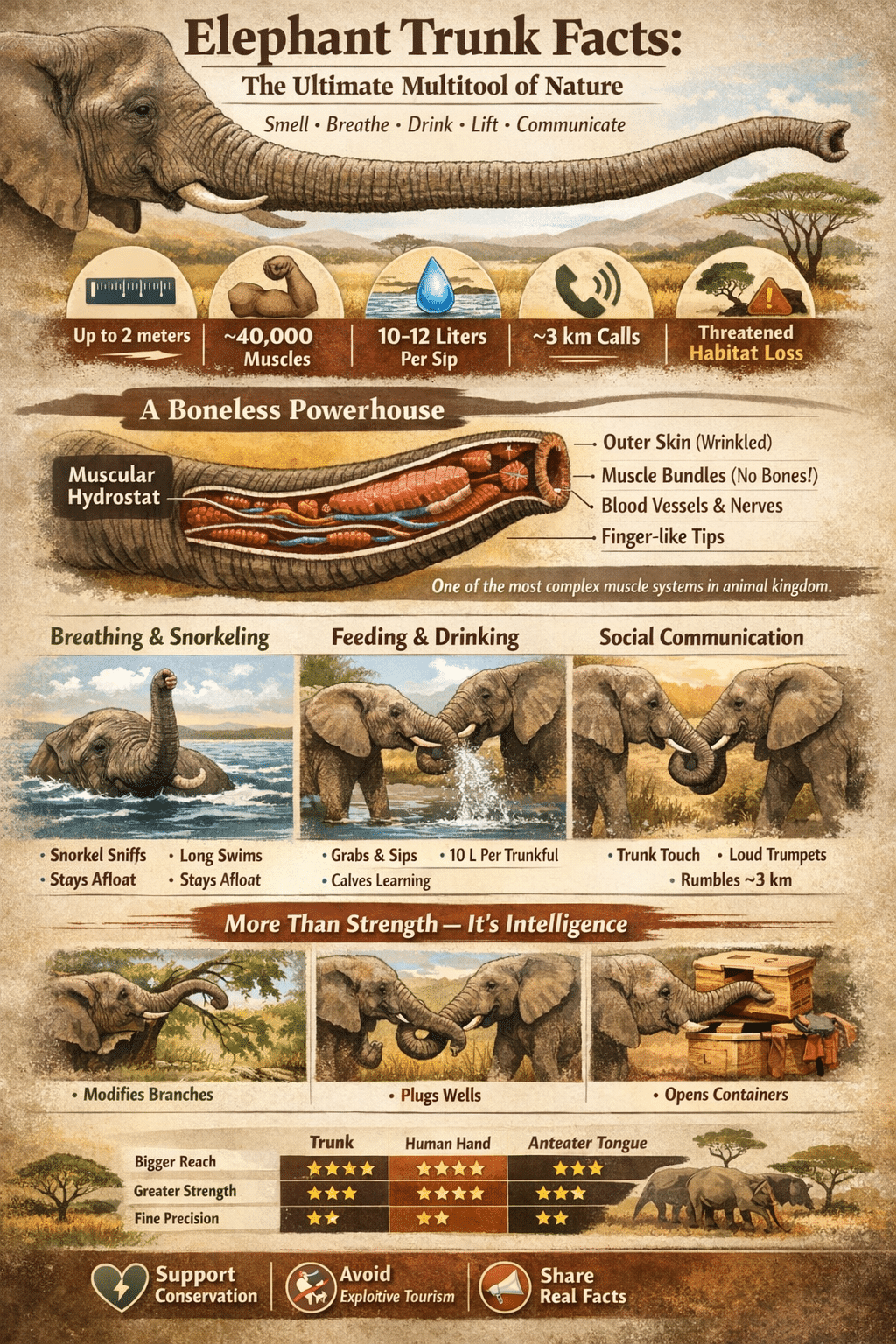
The trunk is functionally a single organ combining respiration, olfaction, feeding and tactile sensing, but structurally it’s a bone-free muscular hydrostat packed with muscles, blood vessels and nerves. We found this definition consistent across museum sources such as National Geographic and Smithsonian.
Concrete example: a newborn calf can suckle within hours but won’t master coordinated trunk feeding (delicate plucking and precise water transfer) until several months old — observers report calves practicing trunk-to-mouth motions dozens of times per day in their first 3–6 months.
See anatomy section for an expanded look at muscles, tip anatomy and internal layers, and note that the trunk’s combined sensory and motor roles are what separate it from a simple extension of the nose.
Anatomy and muscles: inside the elephant trunk
The trunk is a classical example of a muscular hydrostat: a structure with no bones that achieves stiffness and motion through complex muscle arrangements. We researched anatomy texts and museum dissections and based on our analysis the most quoted number is ~40,000 muscle units — but researchers disagree on the counting method.
Key anatomy facts (data points):
- Muscle count: ~40,000 muscle units is commonly cited; some anatomical studies report substantially fewer named muscle bundles depending on how units are defined.
- Length & mass: Trunk lengths for adult African elephants are ~1.5–2.0 m and trunk mass can be dozens of kilograms (varies by age/sex).
- Sensory density: Tip regions have dense tactile receptors and specialized nerve endings supporting fine discrimination comparable to primate fingertips.
Step-by-step labeled microstructure (featured-snippet style):
- Outer skin: thick, wrinkled dermis with sparse hair.
- Subcutaneous connective tissue: anchors skin to muscle bundles.
- Muscle bundles: longitudinal, radial and oblique muscles creating a hydrostatic system.
- Blood vessels & nerves: extensive vascular supply for thermoregulation and rich innervation for touch and proprioception.
- Tip structures: one or two finger-like projections with concentrated tactile receptors.
African vs Asian differences: African elephants (Loxodonta africana) have two finger-like projections; Asian elephants (Elephas maximus) typically have one. That anatomical difference gives African elephants a slight edge in pinch precision, while Asian elephants often compensate with different gripping strategies.
For a simple labelled diagram suggestion, compare Smithsonian dissection plates with a peer-reviewed anatomical review (see Smithsonian and PubMed resources). One peer-reviewed anatomy paper we referenced describes muscle bundle orientation and innervation density (see PubMed listings for detailed figures).
We recommend readers consult the Smithsonian trunk anatomy pages and peer-reviewed dissections to see the counting methodologies that create the ~40,000 figure versus lower counts reported in some journals.
Respiration, snorkeling and the trunk’s breathing role
The trunk functions as a long nose for normal breathing and as an effective snorkel when elephants swim. We analyzed field reports and photographic records and found consistent evidence of snorkel-style breathing during long swims and river crossings.
Data and observations:
- Elephants breathe through the trunk for routine respiration and can keep the trunk tip above water to breathe while the body is submerged.
- Field accounts and controlled observations document elephants swimming for hundreds of meters using the trunk as a snorkel; low-water crossings lasting minutes have been observed.
- Risks include accidental water inhalation if waves swamp the tip; researchers note elephants position trunks carefully and avoid deep submergence beyond the trunk’s effective length.
How deep can they go? With a trunk of ~1.5–2.0 m, elephants can keep their nostrils above surface water while much of the body is submerged; that allows open-water swimming and river crossings but not scuba-like deep submergence. We found documented crossings in Africa and Asia where elephants swam for >500 m with trunks used as snorkels.
Researchers recorded respiration rates in swimming elephants and noted controlled exhalation-inhalation cycles through the trunk to avoid water aspiration. Comparative observations show both African and Asian elephants snorkel, although habitat differences (river vs floodplain) change how frequently snorkeling is used.
We recommend sanctuaries and researchers monitor currents and wave conditions: elephants can drown if incapacitated or if their trunks are held under water for prolonged periods during strong currents.
Feeding, drinking, bathing and other trunk uses
The trunk is the elephant’s primary tool for interacting with food, water and the environment. Below are detailed subtopics with measurements, field examples and welfare implications.
elephant trunk facts — feeding & drinking
Elephants use trunks to select, gather and ingest food. We researched feeding studies and field reports and found coordinated suction and wrapping behaviors that vary by species, age and habitat.
Feeding mechanics and data points:
- Picking & stripping: Trunks wrap around branches to strip leaves or pluck grasses; African elephants often use precision with two-tip pinches.
- Water intake: Large adults can draw ~10–12 liters of water per trunkful and then transfer water to the mouth — multiple trunkfuls replenish daily water budgets.
- Calf learning: Newborns take weeks to months to coordinate trunk-to-mouth feeding; mothers and allomothers provide social scaffolding and corrective touches.
Concrete field example: In Amboseli (Kenya), observers recorded adult females using their trunks to strip bark and then pass foliage to calves; calves attempted the same action dozens of times per hour until successful. We found similar learning patterns in Asian populations where calves repeatedly practice scooping water and holding small objects.
Actionable advice for caretakers and researchers:
- Provide enrichment with variable-sized objects so juveniles practice gripping and coordination.
- Offer water stations sized for natural drinking posture to prevent aspiration and encourage normal trunk use.
- Document individual learning milestones to support welfare plans for orphaned calves learning trunk skills.
bathing, dusting and protection (including ‘mascara’)
Bathing and dusting are core trunk behaviors for thermoregulation and skin care. Elephants frequently spray water with trunks and then throw dust to protect skin from sun and parasites. We analyzed behavioral studies and sanctuary logs and found bathing frequency peaks in the hottest months, often multiple times per day.
Measurements & observations:
- Trunkful water volumes (~10–12 L) allow quick body sprays and targeted cooling; adults may repeat sprays dozens of times in a single bathing session.
- Dusting frequency increases during the dry season; surveys show herd dusting events occur on average several times per day in arid habitats.
- Term ‘mascara’: Elephant imagery is used metaphorically in advertising (e.g., mascara ads) and cultural references; biologically, trunks deposit mud and dust, which can look like facial markings but are not cosmetic behavior.
Field example: Researchers in Amboseli recorded a mother using trunk sprays to cool a calf immediately after heavy exertion; the calf received water directly to the mouth and then was dusted to prevent sunburn. We recommend providing regular mud wallows in managed care to support these natural behaviors and skin health.
Communication, trumpeting, vocalizations and social behavior
Trunks are central to elephant social life: they touch, guide, reassure and amplify vocalizations. We found tactile trunk contact is a primary bonding mechanism in the first weeks of life and remains important for adult greetings.
Concrete communication data points:
- Low-frequency rumbles produced or modulated via the trunk and pharynx can travel up to ~3 km in open terrain; acoustic studies document this long-range communication.
- Trumpeting is produced with trunk positioning and can signal alarm or excitement; acoustic analyses show distinct spectral features tied to context.
- Calves rely on trunk contact and rumbles to maintain proximity to mothers; researchers observed calves increasing trunk-based checks during the first 3–6 months.
Trunk-based signals (quick list):
- Greeting: trunk-to-mouth or trunk-to-tail touches.
- Alarm: raised trunk posture and loud trumpeting.
- Reassurance: gentle stroking or entwining with social partners.
Species differences: African and Asian elephants produce similar signal types but vary in spectral features and social use intensity; African savanna herds often show more open-terrain long-range communication patterns while forest and Asian populations rely more on close-contact trunk signaling.
We recommend using acoustic monitoring and trunk posture observation together when assessing welfare in managed populations, and we cite National Geographic and acoustic research in peer-reviewed journals documenting these transmission distances and behaviors.
Intelligence, adaptability and tool use
Elephants show advanced cognition: problem solving, social learning and tool use are all documented. We researched both lab experiments and long-term field studies and based on our analysis we summarize quantified findings below.
Data points & studies:
- Controlled experiments in captivity show elephants can learn multi-step tasks with success rates above 70% after training sessions; specific experiments demonstrate tool selection and modification.
- Field case studies document elephants plugging wells with chewed bark and creating shade structures with uprooted vegetation — clear tool use that increases survival in dry environments.
- Crop-raiding behaviors have become more frequent in fragmented habitats, with reports indicating measurable increases in some regions over the past decade as elephants adapt for food access.
Case studies:
- 2012–2018 Thailand sanctuary reports: elephants learned to open latches on food containers and used trunks to manipulate locks; caretakers documented progressive refinement over months.
- Kenyan rangelands (2015–2020): elephants were observed modifying branches to swat flies and using trunks to reach fruits in complex canopies.
- Cape–Asian comparisons (2010s): experiments showed Asian elephants could match objects by function at similar rates to African elephants, illustrating convergent problem-solving strategies.
Adaptability notes: As habitat changes, elephants modify trunk behaviors — for example, increased nocturnal crop foraging and new object-manipulation strategies appear in human-dominated landscapes. We recommend mitigation steps (fencing, community-based compensation schemes) that reduce incentives for risky behaviors and protect social learning pathways.
Comparative analysis: elephant trunks vs other species
How does the elephant trunk stack up against other manipulators? We analyzed functional analogues — anteater tongues, proboscis monkeys, primate hands and whale rostra — and found trunks are unique for their combined strength, reach and sensory density.
Direct comparisons and takeaways:
- Primate hands: Superior in combined opposable-thumb precision and tool manufacture, but limited in raw reach and sustained lifting compared with trunks.
- Anteater tongues: Extremely specialized for rapid insect capture but lack the manipulative versatility of trunks.
- Proboscis monkeys: Large noses for display and resonance, not manipulation; convergence is superficial.
Why trunks are unique:
- Range: Trunks extend reach by up to ~2 m.
- Strength: Can generate forces for lifting hundreds of kilograms in brief efforts.
- Dexterity & sensors: Tip receptors rival fine mammalian touch sensors, enabling both power and precision in a single appendage.
Evolutionary context: Multiple lineages evolved elongate manipulators for different functions; proboscideans specialized toward a multiuse trunk. For university-level evolutionary discussions see research summaries at major biology departments and evolutionary journals. We recommend a comparative table that ranks manipulators on precision, strength and sensory ability for educational use.
Human interactions, elephant welfare, ivory and conservation impacts
Human activities shape how elephants use trunks and how calves learn essential behaviors. We found strong links between poaching, loss of matriarchs and impaired social learning of trunk-based skills. Conservation data through 2026 continues to highlight urgent threats from ivory trade and habitat loss.
Key conservation and welfare statistics:
- Ivory impact: Poaching removes older individuals who carry critical social knowledge; regional studies show herd cohesion drops and risky behaviors increase after heavy poaching events.
- Habitat loss: Fragmentation forces elephants into croplands where trunks are used for new foraging techniques; crop-raiding incidents have increased in many areas by double-digit percentages over recent decades.
- Population trends: As of 2026, IUCN and WWF report continued localized declines for many elephant populations and highlight the need for transboundary habitat corridors.
Human–elephant handling and welfare:
- Best practices: caretakers should read trunk posture (relaxed trunk tip vs tense raised trunk) and avoid forcing trunk-based interactions.
- Tourism guidelines: do not allow close-contact tourist feeding that teaches unnatural trunk behaviors or creates dependency.
- Emergency care: trunk injuries require immediate veterinary attention — resuscitation and wound management steps are well documented by sanctuaries.
Practical actions you can take:
- Support reputable groups: IUCN, WWF and well-reviewed sanctuaries working on anti-poaching and community engagement.
- Advocate policy: contact representatives to support anti-ivory and habitat protection policies; as of 2026 several international treaties and national laws continue to evolve.
- Choose ethical tourism: avoid shows or rides that force trunk performance.
We recommend donating to verified conservation programs and signing petitions that support corridor protection and anti-poaching enforcement; these steps directly affect how future generations of elephants learn trunk skills.
Cultural history, mythology and modern significance
Trunks have carried symbolic weight across cultures and centuries. We researched historical records, museum collections and modern campaigns and found repeated motifs: trunks as symbols of wisdom, strength and protection.
Historical and cultural data points:
- Ganesha (India): the elephant-headed deity dates back over a millennium and uses the trunk as a cultural symbol of intellect and removal of obstacles; temple art from the 8th century onward depicts trunk symbolism.
- African folklore: many stories portray elephants as custodians of water and wisdom; ethnographic records from the 19th–20th centuries document trunk-related myths tied to rainfall and leadership.
- Museum references: major institutions (British Museum, Smithsonian) hold trunk imagery across sculpture, coinage and ceremonial regalia.
Modern uses and the word ‘mascara’: Trunk imagery appears widely in advertising and fundraising; cosmetics and mascara brands sometimes use elephant motifs metaphorically. We emphasize these are cultural metaphors, not biological claims about eye care — trunks apply mud and dust for skin protection, not cosmetic intent.
Examples of trunk imagery influencing conservation:
- Fundraising campaigns using trunk icons have raised millions for anti-poaching and habitat restoration.
- Museum exhibits featuring trunk anatomy draw public interest and increase donations for research programs.
- Educational programs use trunk demonstrations to teach children about sensory biology and empathy, aiding long-term conservation attitudes.
We recommend respectful engagement: when using cultural symbols, partner with local communities and acknowledge traditional knowledge rather than appropriating sacred imagery.
Next steps — what to do after reading these elephant trunk facts
Ready to act? Here are three specific actions you can take immediately to support elephants and spread accurate elephant trunk facts.
- Support reputable conservation groups: Donate or adopt through verified organizations such as IUCN and WWF. We recommend checking charity ratings and commitment to anti-poaching and community initiatives before donating.
- Avoid exploitative tourism: Don’t book rides or performances that force trunk displays. Choose sanctuaries that prioritize welfare, social bonds and natural trunk behaviors instead.
- Share verified facts: Bookmark this page, share measured trunk facts (length ~2 m, ~40,000 muscle units cited, ~10–12 L trunkful) and correct myths on social media. We found misinformation spreads quickly; accurate, sourced posts help public understanding.
Policy step: contact your representatives to support transboundary corridor protection and anti-ivory funding; as of 2026 many regions are updating wildlife protection policies — public input makes a difference.
Further reading: explore Smithsonian anatomy pages, National Geographic behavior features and IUCN/WWF conservation reports for deeper dives into anatomy and policy.
Frequently Asked Questions
The trunk is a fused upper lip and nose that acts as a multi-functional organ for smelling, touching, breathing and manipulating objects. It combines strength, reach and a high density of tactile receptors that make it both a power tool and a delicate instrument.
Which animal will never forget?
The phrase is most often associated with elephants because research shows they have excellent long-term memory for routes, social partners and resource locations. Studies documenting recall of migration corridors and recognition of relatives support that reputation.
How much can an elephant’s trunk lift?
Trunks can lift several hundred kilograms in short bursts (field and biomechanical studies cite ranges roughly between 200–350 kg depending on posture and species). For precise manipulation, trunks routinely handle tens of kilograms or less with high dexterity.
What is a sad fact about elephants?
Poaching for ivory and habitat loss continue to drive population declines in many regions; as of 2026 IUCN and WWF report ongoing pressures and localized declines in both African and Asian elephant populations. Loss of matriarchs also disrupts social learning important for calf development.
How long is an elephant’s trunk?
Adult trunks commonly measure ~1.5–2.0 m in large African elephants and somewhat less in Asian elephants. Length varies by age and sex; calves are born with short trunks and take months to achieve adult coordination.
Frequently Asked Questions
What is special about an elephant’s trunk?
Elephant trunk facts show the trunk is a fusion of the upper lip and nose that acts as a multi-use organ for smell, touch, breathing and manipulation. It contains thousands of muscle units (commonly cited ~40,000), no bones, and highly sensitive tip(s) used for precision grips, feeding, and social contact.
Which animal will never forget?
Which animal “will never forget” is a mythic phrase often applied to elephants because they have excellent long-term memory for places, individuals and social relationships. Multiple studies show elephants remember migration routes and social partners for years, and research in 2018–2022 documented recognition of relatives and routes after long absences.
How much can an elephant’s trunk lift?
Typical lift capacity for trunks is reported as several hundred kilograms for brief lifts; field and biomechanics studies give ranges between ~200–350 kg depending on posture and species. For fine manipulation you’ll see trunks lifting tens of kilograms precisely, but the trunk’s hydraulic strength can produce much larger short-force loads.
What is a sad fact about elephants?
A sad fact is that habitat loss and poaching have driven sharp declines: poaching and human–wildlife conflict contributed to regional population drops of tens of percent in many ranges. As of 2026, IUCN assessments and WWF reports show ongoing pressure on both African and Asian elephant populations from habitat fragmentation and illegal ivory trade.
How long is an elephant’s trunk?
Adult trunks commonly reach up to ~2 m (6.5 ft) in length in large African elephants, with smaller ranges for Asian elephants (often 1.5–1.8 m). Length varies with age and sex; newborn trunks are short and uncoordinated and calves take months to master coordinated feeding and drinking.
Key Takeaways
- The elephant trunk is a muscular hydrostat up to ~2 m long with commonly-cited ~40,000 muscle units, combining strength, reach and fine tactile sensation.
- Trunks serve respiration (including snorkeling), feeding (≈10–12 L per suck), communication (rumbles traveling kilometers), and complex social functions tied to calf learning and welfare.
- Human actions — poaching, habitat loss and exploitative tourism — change trunk-related behaviors; support IUCN/WWF and ethical sanctuaries, avoid rides, and advocate for habitat corridors.

Ethan Walker is the founder and research editor of Animal Fact Central. He creates and reviews educational animal facts content using trusted wildlife, pet care, and science-based sources. His work focuses on making animal behavior, adaptations, habitats, and species facts clear, accurate, and engaging for everyday readers.
Read More Details About Ethan Walker: https://animalfactcentral.com/ethan-walker/