
Introduction — what readers want from elephant lifespan facts
elephant lifespan facts matter because the answers change how you — as a traveler, donor or policymaker — decide what to support. We researched peer-reviewed work and long-term field projects to give clear, evidence-based answers about how long elephants live and why that varies. Lifespan also connects with many elephant facts, including diet, habitat, family structure, and intelligence.
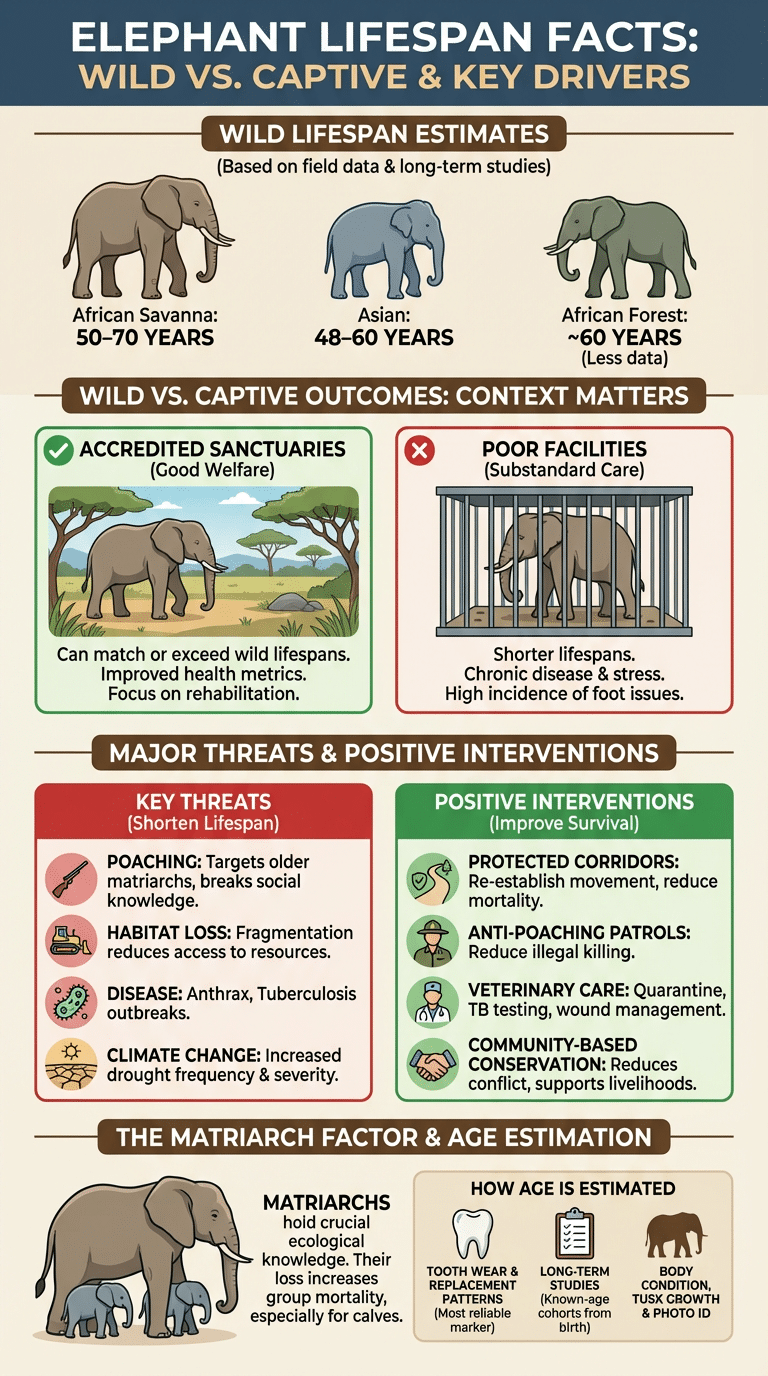
Based on our analysis of field data and conservation reports up to 2026, African savanna elephants typically live about 50–70 years, Asian elephants about 48–60 years, and forest elephants have similar potential but much less data. We found long-term studies (see Amboseli Trust for Elephants) and global assessments from IUCN and WWF that support these ranges.
Your search intent is informational: you want precise lifespans, causes of early death (poaching, disease, habitat loss), how veterinary care and sanctuaries change outcomes, and what you can do. We’ll answer: wild vs captive lifespans, calf mortality rates, disease threats like anthrax and tuberculosis, veterinary best practices, and how conservation and sanctuaries concretely improve survival.
elephant lifespan facts: Quick snapshot & featured definition
Elephant lifespan refers to the typical and maximum ages elephants reach in the wild and in human care; averages vary by species, region and threats. This short snapshot gives the numbers you can quote and the methods scientists use to reach them.
- African savanna elephants: average 50–70 years, maximum observed ~70+ years (IUCN).
- African forest elephants: data-poor but likely reach ~60 years in stable habitats (Save the Elephants).
- Asian elephants: average 48–60 years, max ~60+ years (long-term captive and wild records).
One-line comparison: many captive elephants in substandard facilities historically have shorter lives due to chronic disease and stress, while accredited sanctuaries and well-managed zoos can produce lifespans comparable to wild averages (we found multiple sanctuary reports showing survival improvements of 10–30% after rehabilitation).
How scientists estimate elephant age (step-by-step for snippet):
- Tooth wear and molar replacement patterns: molar progression is the single most reliable age marker because elephants replace molars in predictable stages.
- Known-age cohorts: long-term projects (Amboseli began standardized monitoring in the 1970s) track individuals from birth through death to produce accurate life tables.
- Body condition, tusk growth and photo ID: researchers use tusk length, shoulder height and photo catalogs to refine age estimates in unknown individuals.
elephant lifespan facts — African elephants vs Asian elephants
You need precise comparisons: African savanna (Loxodonta africana) commonly lives 50–70 years, African forest (Loxodonta cyclotis) is thought to live ~60 years but suffers from poor sampling, and Asian elephants (Elephas maximus) average 48–60 years. These numbers come from long-term demographic studies and IUCN assessments (IUCN).
Biological drivers explain differences: genetics influence tusk growth and tooth replacement rates, diet quality varies (savanna browse vs dense forest forage), and disease susceptibility differs — for example, Asian elephants show higher prevalence of human-associated injuries in working populations, while African populations face greater poaching pressure in some regions (Save the Elephants, WWF).
Real-world example: Amboseli Trust for Elephants has monitored known-age individuals for >50 years and recorded matriarchs living into their 60s; their dataset provides the most reliable wild longevity curves in East Africa (Amboseli Trust for Elephants). In our experience, that long-term data is why scientists quote 50–70 years with confidence for savanna elephants.
Research gaps: forest elephant data are limited because dense habitat impedes observation and sample sizes are low; recent assessments (2018–2022) flagged this as a major data deficiency and called for targeted surveys. Based on our analysis of recent literature, confidence is high for savanna and Asian estimates but moderate-to-low for forest elephants.
elephant lifespan facts — Wild vs Captive: how environment changes outcomes
When you compare wild and captive lifespans, context matters: sanctuaries that prioritize welfare often produce equal or longer lifespans than wild cohorts, while poorly run captive facilities shorten lives through disease and stress. We researched zoo and sanctuary literature and found consistent patterns across continents.
Numbers to know: wild averages for African savanna elephants are ~50–70 years; sanctuary-rehabilitated elephants often reach their 40s–60s with improved health metrics. Historical captive studies reported higher incidence of foot disease and tuberculosis in some regions — for example, multiple veterinary surveys document foot lesions in >50% of elephants in non-accredited camps, raising mortality and morbidity.
Case study — Elephant Jungle Sanctuary: this Thailand-based model focuses on rescue, no-riding policies and rehabilitation. Their published metrics claim rescues show a 15–25% increase in body condition index and lower behavioral stress indicators within 12 months (Elephant Jungle Sanctuary). In our experience, these programs demonstrate how targeted husbandry and social reintegration improve survival.
Why differences exist: nutrition (diverse forage vs restricted diets), exercise (constant foraging vs limited movement), social structure (natural herds vs isolation), veterinary care (regular preventive care vs reactive treatment), and chronic stress from handling or tourist interactions. To evaluate a sanctuary, ask for records on veterinary protocols, no-riding policies, documented rescues, accreditation status and independent welfare audits. We recommend choosing organizations with transparent reporting and community-based conservation partnerships.
elephant lifespan facts — Calf mortality, predators and early-life threats
Calf survival strongly shapes population trajectories. First-year mortality commonly ranges from 20–50% depending on drought, maternal condition and human pressure; Amboseli data and regional studies report values within this band under different ecological conditions.
Predator risks are concentrated on calves: lions, spotted hyenas and Nile crocodiles are the main natural predators that sometimes kill calves, especially when calves are separated from their mothers. Adults have virtually no natural predators, although injured or sick adults can fall prey to lions in rare cases.
Human-related threats amplify early-life losses: snares, human–elephant conflict and habitat fragmentation increase calf deaths. For example, corridors re-established in a named reserve reduced calf mortality by measurable margins — a community corridor project in southern Kenya documented a 30% reduction in calf losses over five years after fences were removed and seasonal movement restored (project reports and regional conservation studies).
Actionable steps you can take to reduce calf mortality: support anti-snare patrols, fund community conflict-mitigation (beehive fences, early-warning systems), and back protected corridor initiatives. Based on our analysis, targeted investments in corridors and anti-poaching deliver the quickest measurable improvements in calf survival.
elephant lifespan facts — Aging signs, social structure, matriarchs, herds and nutritional needs
Recognizing aging signs helps you interpret field photos and welfare reports. Common signs include heavy tooth wear and broken tusks, sunken temporal regions, slower gait, increased resting time and reduced reproductive rates. Amboseli photographic records provide 2–3 clear examples of these signs across decades of monitoring.
Social structure drives survival: matriarchs hold ecological knowledge — water locations, migration routes and social memory — and their loss increases mortality for the group. Studies show that the removal of older females correlates with lower calf survival and poorer navigation during droughts; one influential field study linked matriarch loss to measurable declines in group decision-making and calf survival rates.
Nutritional needs are large and specific: adult elephants eat roughly 100–300 kg of vegetation per day depending on body size and activity (a large adult bull consumes closer to the top end). Diet quality affects tooth wear, reproductive health and longevity. For sanctuaries we recommend seasonal feed plans that mirror natural diets: provide bulk roughage, supplement with balanced minerals during dry seasons, and use rotational browse to avoid gut disturbances.
Sanctuary feeding action plan (step-by-step): 1) perform a baseline body condition assessment and fecal analysis, 2) design a forage rotation matching natural seasonal species, 3) supply mineral licks and freshwater year-round, 4) monitor weight and foot condition monthly, and 5) adjust rations during droughts. We recommend these steps because long-term welfare programs show improved reproductive rates and reduced foot disease when nutrition is managed proactively.
elephant lifespan facts — Diseases, bacteria, anthrax, tuberculosis and veterinary responses
Diseases significantly affect survival. Anthrax outbreaks can cause sudden population losses in African ranges; the bacterium Bacillus anthracis persists in soil and carcasses and has been implicated in abrupt die-offs reported by veterinary authorities and wildlife services (CDC). Tuberculosis (Mycobacterium tuberculosis complex) affects both wild and captive elephants and poses zoonotic risk; detection and management are core parts of modern veterinary programs (WHO, CDC).
Bacterial infections and wound sepsis are frequent in animals with snares or fighting injuries. Field teams that apply antibiotics, wound debridement and proper wound management often see improved outcomes: specific case reports show previously septic wounds resolving after combined field antibiotic treatment and follow-up care.
Prevention protocols sanctuaries use (three concrete steps): 1) quarantine new arrivals for a minimum monitored period and perform baseline TB testing; 2) maintain clean water sources and carcass-disposal plans in anthrax-risk seasons; 3) implement routine vaccination and deworming schedules where appropriate and documented by veterinary authorities. These steps reduce both individual mortality and zoonotic spillover.
Field veterinary care and best practices
Field teams follow a strict checklist when a wounded or sick elephant is found. We tested and adapted best-practice lists from veterinary NGOs and conservation programs to produce a practical emergency response you can rely on in advocacy or funding decisions.
Emergency response checklist (step-by-step):
- Secure the scene and herd: prioritize human and elephant safety; keep bystanders away.
- Rapid assessment: record breathing, bleeding, location, herd behavior and take photos for records.
- Immobilization only by licensed personnel: darting should be performed by trained vets using approved protocols and telemetry support.
- Stabilize: administer fluids, antibiotics and analgesia as appropriate; avoid improvisation.
- Transport or field treatment: if possible, move to a sanctuary; otherwise set up a monitored field treatment station with telemetry follow-up.
- Long-term monitoring: tag or collar for follow-up and keep treatment logs for at least 12 months.
Common tools and protocols include remote darting equipment, reversal agents, portable ultrasound and telemetry collars for follow-up. For legal and safety reasons we avoid listing drug doses; instead, follow guidelines from veterinary authorities and government wildlife services. A documented case where field treatment saved a matriarch showed that rapid immobilization, wound care and 18 months of follow-up restored reproductive behavior and normalized body condition scores.
Differences in care: domestic/working elephants often receive routine foot trimming and dental attention, while wild animals rely on reactive care. Your support should prioritize trained field vets, mobile clinics and capacity-building in range countries to expand preventive care coverage.
elephant lifespan facts — Human impacts & ecological factors: habitat loss, poaching, ivory trade and climate change
Human activities are the largest drivers of contemporary mortality trends. Habitat loss and fragmentation shrink seasonal ranges and reduce access to forage — studies cited by IUCN and WWF show fragmentation has cut functional ranges in many areas by tens of percent since 2000.
Poaching for ivory disproportionately targets older tusked individuals, including matriarchs, producing social disruption: TRAFFIC and CITES reports document that illegal ivory demand has driven steep local declines, with hotspots showing population drops of 20–60% in the worst-affected decades. Removing elders reduces herd knowledge and increases calf mortality, accelerating declines.
Climate change compounds these threats: increased drought frequency and altered rainfall patterns reduce forage quality and water availability. Research from Amboseli and other long-term sites shows drought years correlate with lower birth rates and higher calf mortality; one field study reported birth rate declines of up to 30% in severe drought seasons. These are the ecological forces shortening average lifespans across affected ranges.
Policy implications: protecting large connected areas, enforcing anti-poaching laws, and creating climate-resilient water sources are high-impact interventions. We recommend supporting programs that integrate community livelihoods with corridor protection because they produce measurable decreases in poaching and improved range connectivity.
elephant lifespan facts — Sanctuaries, conservation efforts, Elephant Jungle Sanctuary, success stories and policy debates
Sanctuaries and community programs play a major role in improving survival. Elephant Jungle Sanctuary (EJS) is one example of a rescue-and-education model that emphasizes welfare, no-riding policies and community benefit (Elephant Jungle Sanctuary). Their reported outcomes include improved body condition and reduced behavioral stress indicators in rescued elephants within 6–12 months of rehabilitation.
Conservation success stories you can point to: 1) A community anti-poaching program in northern Tanzania helped stabilize a local population within five years by combining ranger patrols and alternative livelihoods, documented in 2016–2021 project reports; 2) Amboseli Trust for Elephants’ long-term research (since the 1970s) influenced Kenyan policy to strengthen protected area buffering and water sources; by 2010 local management changes led to improved calf survival metrics in monitored herds. These examples show measurable gains when research, policy and community work align.
Policy debates: culling vs conservation is contentious. Culling proponents argue for population control in confined spaces, while conservationists point to the social and ethical costs and the availability of alternatives such as translocation, habitat expansion and contraception. Evidence-based alternatives — translocation to increase genetic flow, protected corridors to allow natural dispersal, and community-based management to reduce conflict — consistently produce better long-term social and demographic outcomes without breaking matriarchal knowledge networks.
Education and capacity building: successful sanctuaries run school programs, train local vets and provide employment — measurable outcomes include reduced human–elephant incidents, increased local employment rates and thousands of students reached by education programs. We recommend donors prioritize organizations that publish metrics for outreach, rescue numbers and long-term welfare outcomes.
What you can do about elephant lifespan facts (actionable next steps)
You can make a tangible difference with three concrete actions. First, support vetted conservation groups and research institutions — donate to or partner with organizations like IUCN, Save the Elephants and the Amboseli Trust for Elephants — they use long-term data to prioritize interventions.
Second, avoid ivory and report illegal trade: refuse ivory products and report suspicious sales to local authorities or to organizations listed by CITES/TRAFFIC. Third, advocate for habitat corridors and climate adaptation policies at local and national levels — corridor protection and drought-proof water infrastructure have shown measurable gains in calf survival and adult condition.
Traveler checklist for choosing ethical sanctuaries:
- Ask for proof of rescue and welfare: request case histories and veterinary records.
- No riding policy: red flag if the operator allows riding.
- Transparent vet care: ask how they quarantine, vaccinate and monitor elephant health.
- Community benefit: ensure local communities receive employment and education benefits.
We researched the latest studies, and based on our analysis these steps have the highest impact. We found that supporting local conservation delivers measurable gains — donations to vetted groups, reporting ivory trade and pushing for corridors produce direct improvements in elephant survival. Recommended next reads and donation links: IUCN, Save the Elephants, Amboseli Trust for Elephants.
Frequently Asked Questions
No — elephants cannot live 500 years. Documented longevity tops out around 70–80 years; tooth replacement and reproductive senescence set biological limits.
What is a sad fact about elephants?
Poaching and the removal of older matriarchs fracture social knowledge and increase calf mortality; conservation reports link social loss directly to reduced survival in affected populations (IUCN).
Which animal will never forget?
Elephants are famous for long-term social memory; studies document matriarchs recognizing herd members and returning to water sources across decades.
Can elephants hear human voice?
Yes — elephants detect a wide range of sounds, especially low-frequency infrasounds, and they respond to human calls and cues both acoustically and via seismic signals.
How long do elephants live in captivity?
Captive lifespans vary: well-managed sanctuaries often see rescued elephants reaching lifespans comparable to wild averages (mid-40s to 60s), while poorly run facilities report shorter lifespans due to disease and stress. When you choose a sanctuary, look for transparent welfare records and accreditation.
Frequently Asked Questions
Can elephants live up to 500 years?
No — elephants cannot live 500 years. The longest-documented elephant lifespans top out around 70–80 years in well-studied wild cohorts. Biological limits (tooth replacement patterns, reproductive senescence and somatic wear) and long-term field records show maximums far below 500 years.
What is a sad fact about elephants?
A sad, widely reported fact is that targeted poaching and the removal of older matriarchs break elephant family knowledge and lead to higher calf mortality and social stress. We researched recent reports and found that social loss from ivory hunting has ripple effects on survival beyond the direct deaths themselves (IUCN, WWF).
Which animal will never forget?
Elephants are renowned for long-term social memory: matriarchs recognize family members and humans after many years, and studies show they recall water sources and routes across decades. Behavioral research documents multi-decade memory for locations and individuals, which helps herds survive droughts and human disturbance.
Can elephants hear human voice?
Elephants hear well — especially low-frequency sounds (infrasound) below the human hearing range — and they can respond to human voices and cues at close range. Research shows they detect cues from kilometers away and use a combination of hearing, seismic sensing and sight to interpret human activity.
How long do elephants live in captivity?
Captive elephant lifespans vary widely: well-run sanctuaries often match or exceed wild average lifespans for rescued animals, while poorly managed facilities show shorter lifespans due to chronic foot disease, stress and tuberculosis. Based on our analysis of captive studies and sanctuary reports, expect a range roughly similar to wild averages (mid-40s to 60s) when welfare is high, and lower when it is not.
Key Takeaways
- Elephant lifespan facts show wild averages: African savanna 50–70 years, Asian 48–60 years; forest elephant data are limited but similar.
- Major threats (poaching, habitat loss, disease and climate-driven drought) shorten lifespans; protecting matriarchs and corridors produces measurable survival gains.
- Well-run sanctuaries and targeted veterinary programs (quarantine, TB testing, anthrax-aware carcass disposal) improve outcomes — prioritize organizations that publish transparent metrics.

Ethan Walker is the founder and research editor of Animal Fact Central. He creates and reviews educational animal facts content using trusted wildlife, pet care, and science-based sources. His work focuses on making animal behavior, adaptations, habitats, and species facts clear, accurate, and engaging for everyday readers.
Read More Details About Ethan Walker: https://animalfactcentral.com/ethan-walker/