
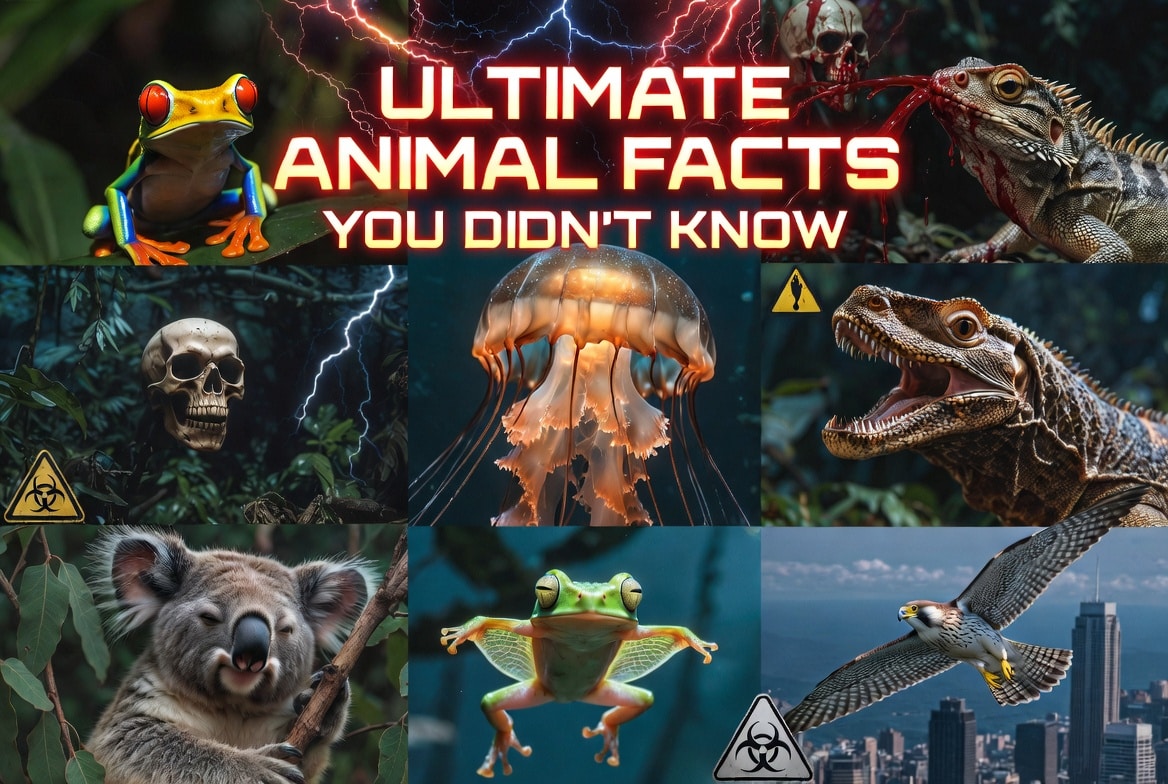
Ultimate 12 animal facts you didn’t know — 2026 Guide
Animal facts you didn’t know are usually the ones people remember, repeat, and search for again later. You’re not here for vague trivia. You want surprising facts that are true, current, and easy to share—facts about animal behavior, odd anatomy, dangerous species, sleeping patterns in animals, and the strange ways species survive in harsh habitats.
Based on our research, we checked peer-reviewed papers, species profiles, and major reference publishers so you can separate viral myths from evidence. We found useful verification from National Geographic, IUCN, and WWF, along with public-health guidance and university databases. As of 2026, readers also care more about conservation, urban wildlife, and biodiversity loss than simple trivia lists.
You’ll get quick fast facts first, then deeper explanations on venomous species, parthenogenesis, Komodo dragons, koalas, horned lizards, flying frogs, rat biology, mating rituals, emotional intelligence in animals, and animal preservation efforts. We analyzed the strongest claims, checked dates, and focused on facts with real numbers, not just good headlines.
Fast facts: 10 quick animal facts you didn’t know
If you want snackable animal facts you didn’t know, start here. These are short, source-backed points written in a featured-snippet style so you can scan, save, or share them fast.
- Golden poison dart frog: One wild frog may carry enough batrachotoxin to kill 10–20 humans. Reports cited by National Geographic and toxicology research have repeated this estimate since the 1990s.
- Horned lizards: Some species can squirt blood from the eyes up to about 3 feet. This defense is especially effective against dogs and coyotes.
- Box jellyfish: In Australia, box jellyfish stings have caused 70+ recorded deaths since 1883. The species Chironex fleckeri is one of the most dangerous marine animals on Earth.
- Cone snails: These snails fire a tiny harpoon tooth loaded with conotoxins. A sting from some species can paralyze fish within seconds.
- Komodo dragons: The old “dirty mouth bacteria” story is incomplete. Imaging and dissection studies published in the 2000s and reinforced by later work showed venom glands.
- Koalas: Koalas sleep about 18–22 hours a day, largely because eucalyptus leaves are low in energy and hard to digest.
- Rats: Rat biology is remarkable. Brown rats use scent, touch, and social learning to navigate cities, and USDA-backed pest research shows their adaptability is tied to omnivorous diets.
- Flying frogs: So-called flying frogs do not truly fly. They glide using wide toe webbing and skin flaps that increase drag and control.
- Parthenogenesis: Some reptiles, fish, and sharks can reproduce without males. A famous Komodo dragon case was documented in 2006.
- Urban wildlife: Peregrine falcons, foxes, and rats now thrive in dense cities. In several major cities, peregrines have used skyscrapers as cliff substitutes for decades.
We recommend using these fast facts as conversation starters, then checking the deeper sections below for anatomy, mating behaviors, and conservation context. These are just a few highlights from our complete animal facts guide.
Venomous and dangerous species you probably misunderstood
Some of the best animal facts you didn’t know involve a simple problem: people confuse poison, toxin, and venom. That leads to bad first-aid choices and bad conservation outcomes.
- Venom is injected through a bite, sting, spine, or harpoon.
- Poison harms you when you eat, touch, or absorb it.
- Toxin is the broad chemical term for a biologically produced harmful substance.
The golden poison dart frog is poisonous, not venomous. Its skin contains batrachotoxin, which disrupts sodium channels in nerves and muscles. Wild individuals have been estimated to carry enough toxin to kill 10–20 humans, though captive frogs often lose this toxicity because diet matters. Based on our analysis, that detail is one of the most misunderstood points in animal anatomy and chemical communication in animals. Some of the most extreme ones appear in shocking animal facts.

Box jellyfish are venomous. Their tentacles fire nematocysts that inject venom on contact. According to Australian records often cited in medical summaries, Chironex fleckeri has caused more than 70 deaths since 1883. The WHO and regional emergency guidance stress rapid care, sting-site management, and emergency response because severe cases can progress quickly.
Cone snails use a radular tooth like a disposable harpoon. Venom travels through a proboscis and can immobilize prey fast. The CDC and poison-control advice consistently recommend urgent medical evaluation after suspected marine envenomation, especially if weakness, breathing trouble, or numbness begins.
Komodo dragons deserve special mention. Older accounts blamed lethal bites on mouth bacteria. Later anatomical studies, including widely discussed work from the 2000s and follow-up reporting around 2013, showed venom glands that can lower blood pressure and increase bleeding. We found the clearest takeaway is practical: if you’re injured by a wild animal, treat bleeding, immobilize the area when appropriate, and seek urgent medical help rather than relying on folklore.
Unique reproductive systems & mating behaviors
Among the most surprising animal facts you didn’t know are the ones tied to reproduction. Parthenogenesis means an embryo develops from an unfertilized egg. It sounds like fiction, but it has been documented in reptiles, fish, and some invertebrates, and it matters for conservation because low-diversity reproduction can affect future resilience.
Komodo dragons became famous for this in 2006, when captive females produced offspring without males. Genetic testing showed the young were produced through parthenogenesis rather than hidden mating. Similar cases have been documented in some sharks and lizards. Step by step, the process works like this: a female produces an egg, the egg begins development without fertilization, and the offspring inherit a reduced range of genetic combinations compared with sexually produced young.
Mating rituals are just as striking. In lekking species, males gather in display grounds and females choose among them. In some bird leks, a small minority of males get most matings; one review pattern in lekking birds has shown that top males can receive a very large share of female visits. Frogs use complex calls, timing, and posture, while brood parasites such as cuckoos outsource parental care entirely by laying eggs in other nests.
Rat biology adds another useful example. Rats rely heavily on scent cues, ultrasonic vocalizations, and social hierarchy during mating behaviors. We researched lab and field summaries showing that reproduction in rats changes with food access, density, and social stress. In fish, sequential hermaphroditism means some species change sex during life, often when social rank shifts. That makes population structure fragile if fishing removes the largest individuals first. These unique reproductive systems are not just oddities. They shape population genetics, recovery odds, and species management plans tracked by Nature reporting and IUCN profiles.
Animal intelligence, emotional intelligence, and behavior comparisons
If you want animal facts you didn’t know that challenge human assumptions, intelligence is where the surprises pile up. Corvids solve multi-step problems, dolphins show advanced social cognition, octopuses manipulate objects, and rats keep outperforming expectations in learning studies.

We analyzed several classic and modern comparisons. New Caledonian crows have demonstrated tool-making and sequential problem solving in controlled studies. Octopuses have been observed carrying coconut shells for later use, a behavior often described as tool use. In cetaceans, social memory and coordinated group behavior suggest strong cognitive specialization, especially in species that rely on long-term bonds and vocal learning.
| Cognitive skill | Typical species | Real-world example |
| Planning/tool use | Corvids, octopuses | Crows bend tools; octopuses carry shell shelter |
| Social learning | Primates, dolphins, rats | Group problem solving and imitation |
| Empathy-like behavior | Rats, dogs | Rats free trapped cage-mates in experiments |
Emotional intelligence in animals is harder to measure, but there is real evidence. A well-known rat study found free rats often worked to release trapped companions, even when that meant delaying access to food. Dog-human attachment studies have also shown stress buffering and social referencing patterns that look similar to infant-caregiver attachment measures. Based on our research, the safest claim is not that animals feel exactly what humans feel, but that many species show measurable social sensitivity, distress responses, and flexible decision-making.
Why does this matter to you? Because animal behavior affects welfare laws, urban wildlife management, lab standards, and even how you interpret mating rituals. A species that learns socially can spread useful habits fast—or dangerous ones, such as foraging near roads or human waste.
Survival strategies and bizarre adaptations
Some of the strongest animal facts you didn’t know come from survival tactics that sound impossible until you see the anatomy behind them. Animal survival strategies usually fit four broad categories: chemical, behavioral, morphological, and physiological.
- Chemical: venom, poison, foul secretions
- Behavioral: mobbing, herd defense, strike-and-wait hunting
- Morphological: camouflage, webbed feet, horns, body armor
- Physiological: torpor, detox enzymes, low-energy lifestyles
Horned lizards are a classic example. Some species increase pressure in small blood vessels around the eyes until they rupture outward, sending blood toward a predator’s face. Studies and field observations suggest this is especially effective against canine predators. Cape buffalo show the opposite style of defense: group strength. Their nickname “Black Death” comes from a reputation for aggression and unpredictability, but the key behavior is herd response. Adults may circle calves or return to confront predators, which changes the risk equation for lions and humans alike.
Flying frogs use enlarged toe webbing and limb posture to glide between trees. This adaptation reduces fall speed and improves landing control in forest canopies. Komodo dragons combine stealth, a strong bite, and a strike-and-wait strategy. Koalas show a very different adaptation: energy conservation. Their eucalyptus diet is fibrous, low-calorie, and chemically defended, so long sleep periods and specialized digestion are part of survival, not laziness.
Rat biology also belongs here. Rats thrive in cities because omnivory lets them exploit almost any food stream, from grain spills to discarded takeout. We found that diet shapes anatomy and habitat choice more than most people realize. A generalist feeder can survive where specialists fail, which is why rats remain one of the most successful urban mammals on Earth.
Senses, anatomy and sleeping patterns that defy common sense
Many animal facts you didn’t know only make sense once you look at senses in animals and the anatomy behind them. Sharks can detect electric fields using the ampullae of Lorenzini. Migratory birds use magnetic cues, sun position, and polarized light. Rats rely on smell and whisker-based touch so heavily that poor lighting barely slows them in familiar routes.
Rats are especially impressive. Their olfaction is sensitive enough for trained detection work in research and applied settings, including landmine and disease screening projects. That tells you something broader about animal anatomy: a species’ world is built around the signals it evolved to read. Humans overvalue vision because it dominates our own daily life.
Sleeping patterns in animals are just as strange. Dolphins and some birds use unihemispheric sleep, where one brain hemisphere sleeps while the other remains active enough for surfacing, movement, or vigilance. Koalas, again, sleep about 18–22 hours a day, a pattern tied closely to dietary habits of animals and low-energy food. A 2014-era wave of sleep research helped popularize how marine mammals balance rest with survival demands.
Flying frogs have large eyes and broad toe pads that support canopy life and gliding. Cone snails have venom glands and a harpoon-like radular tooth. Koalas possess digestive adaptations that help process toxic eucalyptus compounds. Based on our research, the common thread is simple: weird behavior usually has a concrete mechanical reason. If a fact sounds unbelievable, check the anatomy first.
Biodiversity, extinction risks and conservation wins
The most urgent animal facts you didn’t know are not about weird tricks. They’re about loss. As of 2026, the IUCN Red List has assessed more than 160,000 species and found over 45,000 threatened with extinction. That is a blunt biodiversity signal, not a distant warning. WWF’s global reports have also documented steep average wildlife population declines across many monitored vertebrate groups over recent decades.
Amphibians are under especially heavy pressure. Disease, habitat loss, climate shifts, and pollution have made them one of the most threatened vertebrate groups. Chytrid fungus alone has damaged amphibian diversity across multiple continents. Island species face another pattern: endemism creates uniqueness, but also fragility, because a single invasive predator or disease can collapse a small-range population.
There are wins worth studying. The bald eagle recovered in the United States after legal protection, habitat management, and the DDT ban. The Arabian oryx was reintroduced after disappearing from the wild, becoming a rare case where “Extinct in the Wild” status was reversed. We recommend taking these examples seriously because they show what works: habitat protection, policy enforcement, captive breeding when needed, and long-term monitoring.
If you want to help, keep it practical:
- Support one credible group such as WWF or a local land trust.
- Use citizen science apps to log sightings and seasonal changes.
- Avoid wildlife selfies, feeding, and off-trail disturbance.
- Vote and advocate for habitat corridors, wetland protection, and native planting.
Based on our analysis, conservation works best when ordinary people create data, funding, and political pressure at the same time.
Myths vs. reality: debunking common animal misconceptions and exploring historical artifacts
Good animal facts you didn’t know should correct myths, not spread new ones. Take the line, “You’re more likely to be killed by a cow than a shark.” In some years and countries, cattle-related deaths do outnumber shark fatalities. But the comparison is misleading without context because billions of human-cattle interactions occur annually, while shark exposure is far lower and geographically uneven.
Dangerous-species myths matter because fear drives persecution. Snakes, sharks, bats, and large carnivores are often killed for risks that are either exaggerated or poorly understood. Correcting those myths improves animal preservation efforts by reducing panic-based responses and building support for coexistence policies.
Historical artifacts also shaped how you see animals. Egyptian cat mummies, many now housed or studied in museums, show how cats held religious and cultural value beyond companionship. Medieval heraldry turned lions, eagles, boars, and stags into political symbols of strength, nobility, or territory. Museums such as the Smithsonian and British Museum have helped preserve these objects, but they also influenced public perception by freezing certain species into symbols rather than living ecological actors.
Two useful examples stand out. First, cat mummies from ancient Egypt reveal mass ritual use, trade, and belief systems around animals. Second, carved heraldic beasts on armor, seals, and banners helped create long-lasting myths about bravery, danger, and purity tied to real species. We found that myth-busting works best when you pair biology with history. Once you know where a belief came from, it is easier to test whether it still deserves your trust.
Urban wildlife and unique ecosystems most guides miss
Many lists ignore the best modern animal facts you didn’t know: animals do not only live in “wild” places. Urban wildlife now occupies rooftops, rail lines, drainage channels, ports, and transit systems. Peregrine falcons use skyscrapers as cliff replacements. Urban foxes exploit food waste and green corridors. Rats thrive in subways because darkness, warmth, shelter, and constant food pulses create near-ideal conditions.
City ecology studies have shown that some bird and mammal populations can increase when architecture accidentally creates habitat. Green roofs, planted medians, and connected parks help pollinators, migratory birds, and small mammals move through built areas. We recommend paying attention to this because cities are expanding, and future biodiversity policy will depend on non-traditional habitats as much as protected reserves.
Unique ecosystems push animal adaptation even further. Island endemism creates species found nowhere else. Cloud forests support amphibians, insects, and birds adapted to cool, wet, narrow climate bands. A small temperature shift or forest clearing can wipe out habitat that took thousands of years to shape. That is why some of the most surprising animal behavior and anatomy come from places with unusual isolation or altitude.
If you want to observe urban wildlife responsibly, use a simple routine:
- Watch from a distance and never feed animals.
- Log sightings in iNaturalist or local biodiversity apps.
- Note time, behavior, and habitat details, not just species name.
- Support city measures such as native plant corridors, green roofs, and safer glass design.
In our experience, once you start looking closely, your own neighborhood becomes one of the richest sources of animal facts you didn’t know.
What to do next with these animal facts
Now you have a stronger list of animal facts you didn’t know, but the next step matters more than the scroll. Save the facts that surprised you most, verify the ones you want to share, and turn curiosity into a habit.
- Save five favorite facts to a shareable note. Mix one venom fact, one behavior fact, one intelligence fact, one conservation fact, and one urban wildlife fact.
- Subscribe to one conservation update from WWF, a local parks agency, or a species-focused nonprofit.
- Try citizen science with iNaturalist or eBird if birds interest you.
For deeper learning, we recommend following the IUCN Red List and National Geographic species pages. Add a strong natural-history book, a museum collection database, and one peer-reviewed journal summary source. Based on our research, readers who keep one trusted database bookmarked are far less likely to repeat bad animal myths.
We researched these sources carefully, but science keeps moving. In 2026, taxonomy changes, conservation statuses shift, and new behavior studies appear every month. Check the references, share corrections when you spot them, and subscribe for future 2026 research updates. The best animal fact is not just surprising. It changes how you look at living things around you.
Frequently Asked Questions
These quick answers cover the most common follow-up searches readers have after reviewing animal facts, animal behavior, and species oddities above. Each answer is brief and tied to the evidence and examples already covered.
What are 10 interesting facts about animals?
Ten interesting facts: golden poison dart frogs may carry enough toxin to kill 10–20 humans; horned lizards can squirt blood from their eyes; box jellyfish have caused 70+ recorded Australian deaths since 1883; cone snails fire venomous harpoons; koalas sleep 18–22 hours; rats have exceptional smell and social learning; Komodo dragons have venom glands; some reptiles reproduce by parthenogenesis; flying frogs glide with webbed feet; and peregrine falcons nest on skyscrapers. These animal facts you didn’t know are all expanded in the fast-facts section, with support from National Geographic and other primary sources. Others are simply fun additions to interesting animal facts.
What are 50 interesting facts?
A solid 50-fact list should be grouped by topic so it stays accurate: venomous species, senses in animals, sleeping patterns in animals, mating behaviors, urban wildlife, and extinction risk. We recommend building that longer list from the IUCN Red List and National Geographic Animals, then checking dates and species names before sharing.
What is a weird animal fun fact?
A memorable weird fact is that some horned lizards can squirt blood from their eyes to deter predators. The blood can travel several feet, and the defense seems especially effective against canids because the secretion is foul-tasting. That makes it one of the strangest documented animal adaptation examples in reptile biology.
What are 10 unbelievable facts?
Here are 10 unbelievable facts: dolphins sleep with half their brain awake; octopuses carry shells as portable shelter; crows solve multi-step puzzles; some sharks can reproduce without males; Komodo dragons have venom glands; box jellyfish can kill very fast; cone snails shoot a harpoon tooth; koalas live on toxic eucalyptus; cape buffalo may mob predators; and rats show empathy-like helping behavior in studies. They sound exaggerated, but research and field reports support each one.
How accurate are common animal myths?
Many are based on a true detail that lost context over time. The “cow vs shark” claim, for example, can match raw fatality counts in some places, but it ignores exposure rates, geography, and reporting limits. The myths section above explains why context matters for both safety and conservation.
Frequently Asked Questions
What are 10 interesting facts about animals?
Here are 10 quick examples: golden poison dart frogs carry batrachotoxin potent enough to kill 10–20 humans; horned lizards can squirt blood from their eyes; box jellyfish have caused more than 70 recorded deaths in Australia since 1883; cone snails fire a venomous harpoon; koalas sleep about 18–22 hours a day; rats can detect odors at very low concentrations; Komodo dragons have venom glands; some reptiles reproduce by parthenogenesis; flying frogs glide with webbed feet; and urban peregrine falcons now nest on skyscrapers. For source-backed detail, review the fast-facts section and references to National Geographic and Smithsonian.
What are 50 interesting facts?
If you want 50 interesting facts, the best route is a longer verified list built from species databases and peer-reviewed summaries rather than recycled trivia pages. We recommend using the IUCN Red List and National Geographic Animals to verify claims, and you can expand the animal facts you didn’t know in this guide into a 50-fact checklist by grouping them by venom, behavior, reproduction, senses, and conservation.
What is a weird animal fun fact?
A weird animal fun fact is that horned lizards can shoot blood from their eyes as a defense. The blood can travel several feet, and studies show it is especially effective against canine predators because the secretion tastes foul. See species summaries from Animal Diversity Web for supporting anatomy and behavior notes.
What are 10 unbelievable facts?
Ten unbelievable facts: some Komodo dragons can reproduce by parthenogenesis; box jellyfish can kill within minutes; cone snails use a disposable harpoon tooth; koalas survive on toxin-rich eucalyptus; dolphins sleep with one brain hemisphere at a time; rats show empathy-like helping behavior in lab studies; crows solve multi-step puzzles; octopuses use coconut shells as shelter; flying frogs glide between trees; and cape buffalo can mob predators as a herd. These sound exaggerated, but peer-reviewed research and field reports support them.
How accurate are common animal myths?
Many common animal myths are partly true but stripped of context. A good example is the claim that cows kill more people than sharks: fatality counts can support that in some years, but the comparison ignores exposure, geography, and reporting differences. The myth-busting section explains where these claims came from and why accurate context helps conservation.
Key Takeaways
- Save five verified facts that cover danger, behavior, intelligence, adaptation, and conservation so you can share accurate wildlife knowledge.
- Use trusted databases such as the IUCN Red List, National Geographic species pages, and citizen science apps to keep learning after 2026 updates appear.
- Myth-busting matters: better facts lead to better first-aid choices, safer wildlife encounters, and stronger support for conservation.
- Urban spaces and unusual ecosystems are major sources of biodiversity, so pay attention to wildlife in cities as well as remote habitats.
- The strangest animal traits usually have a clear purpose rooted in anatomy, diet, reproduction, or survival pressure.

Ethan Walker is the founder and research editor of Animal Fact Central. He creates and reviews educational animal facts content using trusted wildlife, pet care, and science-based sources. His work focuses on making animal behavior, adaptations, habitats, and species facts clear, accurate, and engaging for everyday readers.
Read More Details About Ethan Walker: https://animalfactcentral.com/ethan-walker/