Types of Fish: 4 Major Living Lineages Explained

Types of Fish: Jawless, Cartilaginous, Ray-Finned, and Lobe-Finned Fish

The major types of fish are more varied than the familiar classroom split between jawless, cartilaginous, and bony fishes suggests. For a modern, reader-friendly view, it helps to recognize four living contexts: jawless fishes, cartilaginous fishes, ray-finned fishes, and the living fishes within the lobe-finned lineage. These groups differ in ancestry, jaws, skeletons, fins, respiration, … Read more
What Makes an Animal a Fish? Key Traits Explained

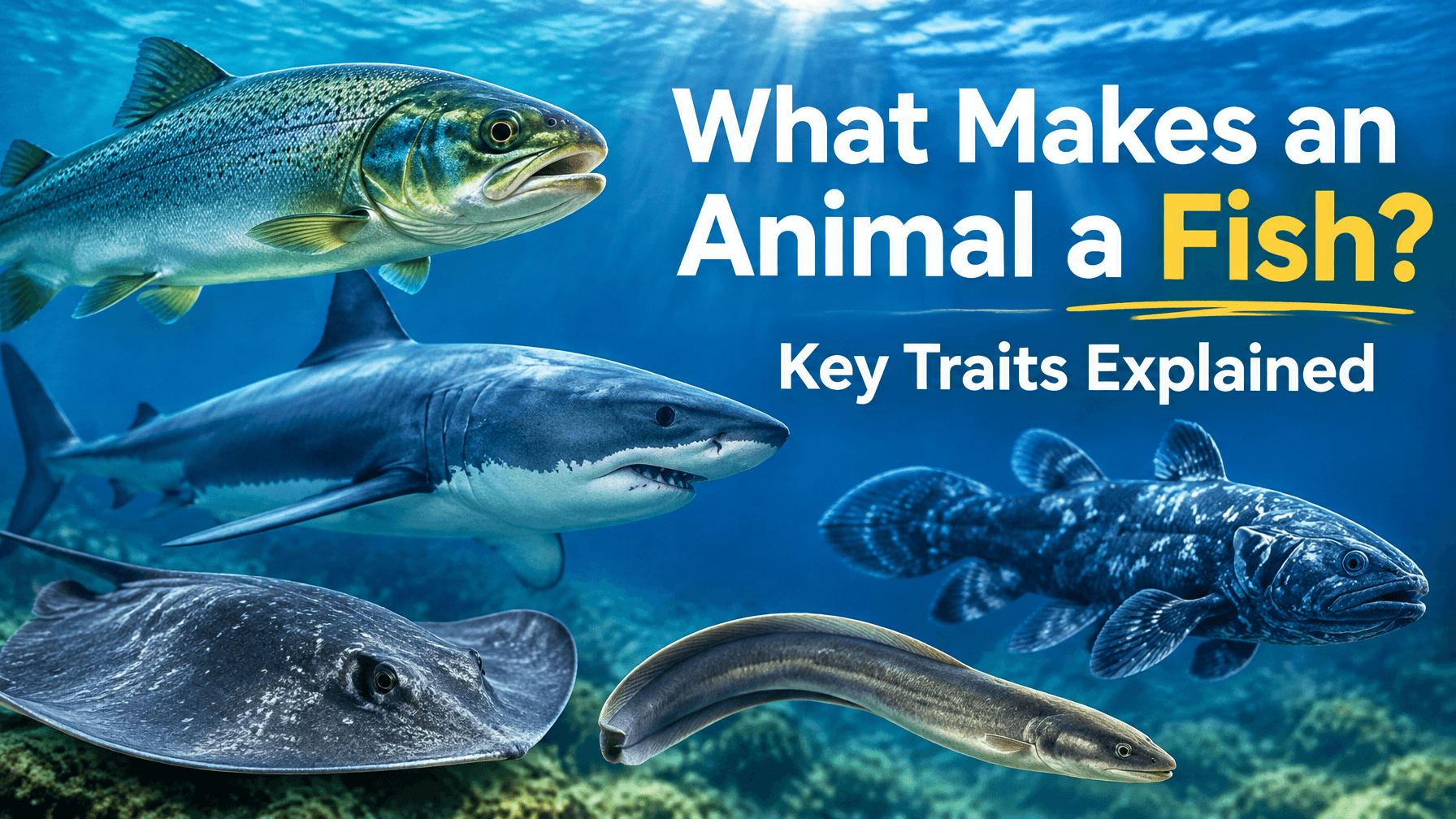
What Makes an Animal a Fish? Key Traits Explained

A fish is best understood as an aquatic vertebrate from one of several evolutionary lineages that people conventionally call fishes. Most fishes have gills, fins, aquatic sensory systems, and body plans built for moving through water, but no single visible trait works as a perfect definition. Some fishes lack ordinary scales. Some are jawless. Some … Read more

Fish Facts: Biology, Types, Habitats & Adaptations

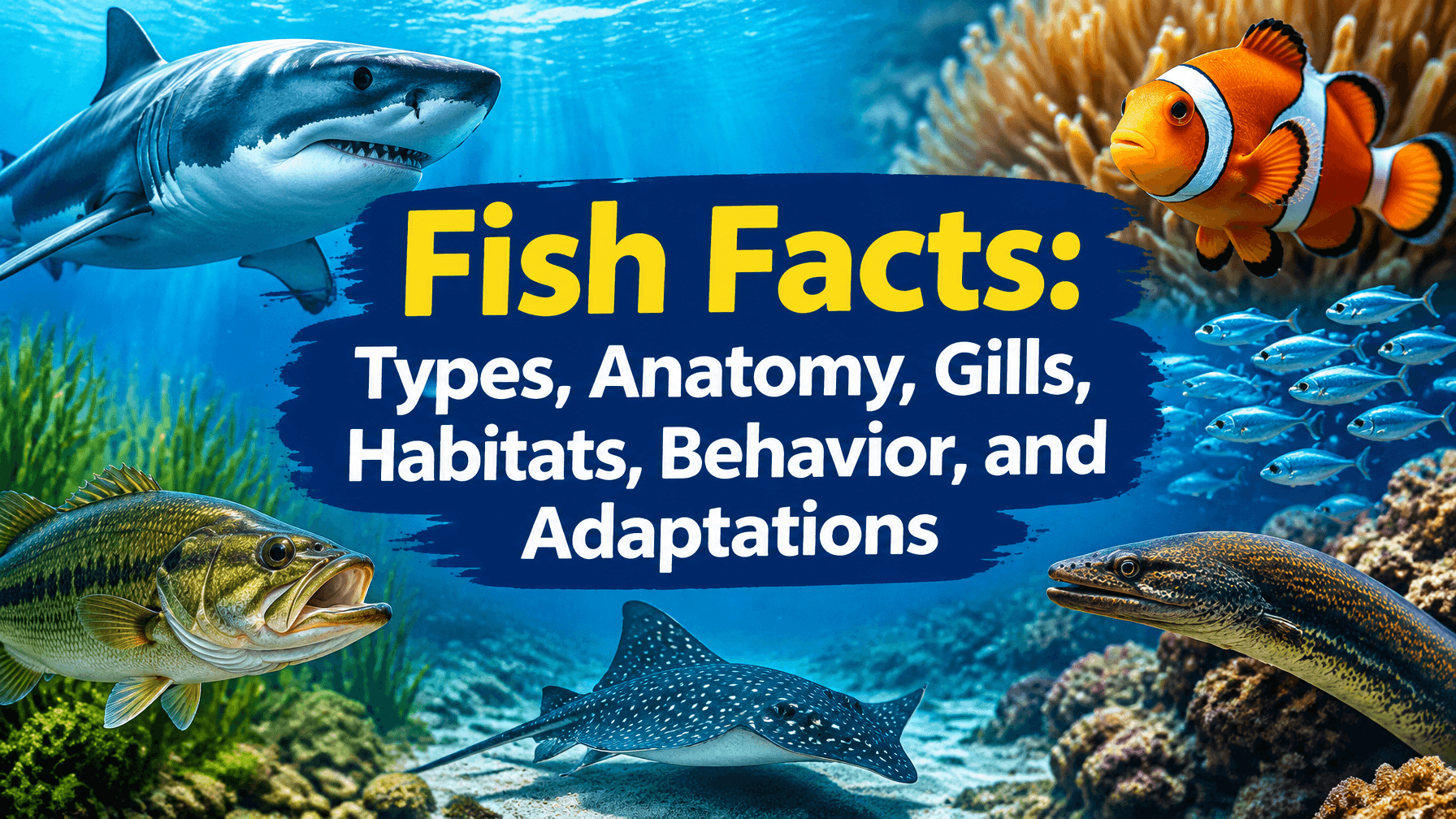
Fish Facts: Types, Anatomy, Gills, Habitats, Behavior, and Adaptations

Fish are extraordinarily diverse aquatic animals, and a useful overview has to go well beyond the familiar image of a scaly, perch-shaped swimmer. Living fishes include jawless hagfishes and lampreys, cartilaginous sharks and rays, the enormous radiation of ray-finned fishes, and living lobe-finned fishes such as lungfishes and coelacanths. They occupy fresh water, salt water, … Read more

Insect Conservation: Declines, Threats & Protection

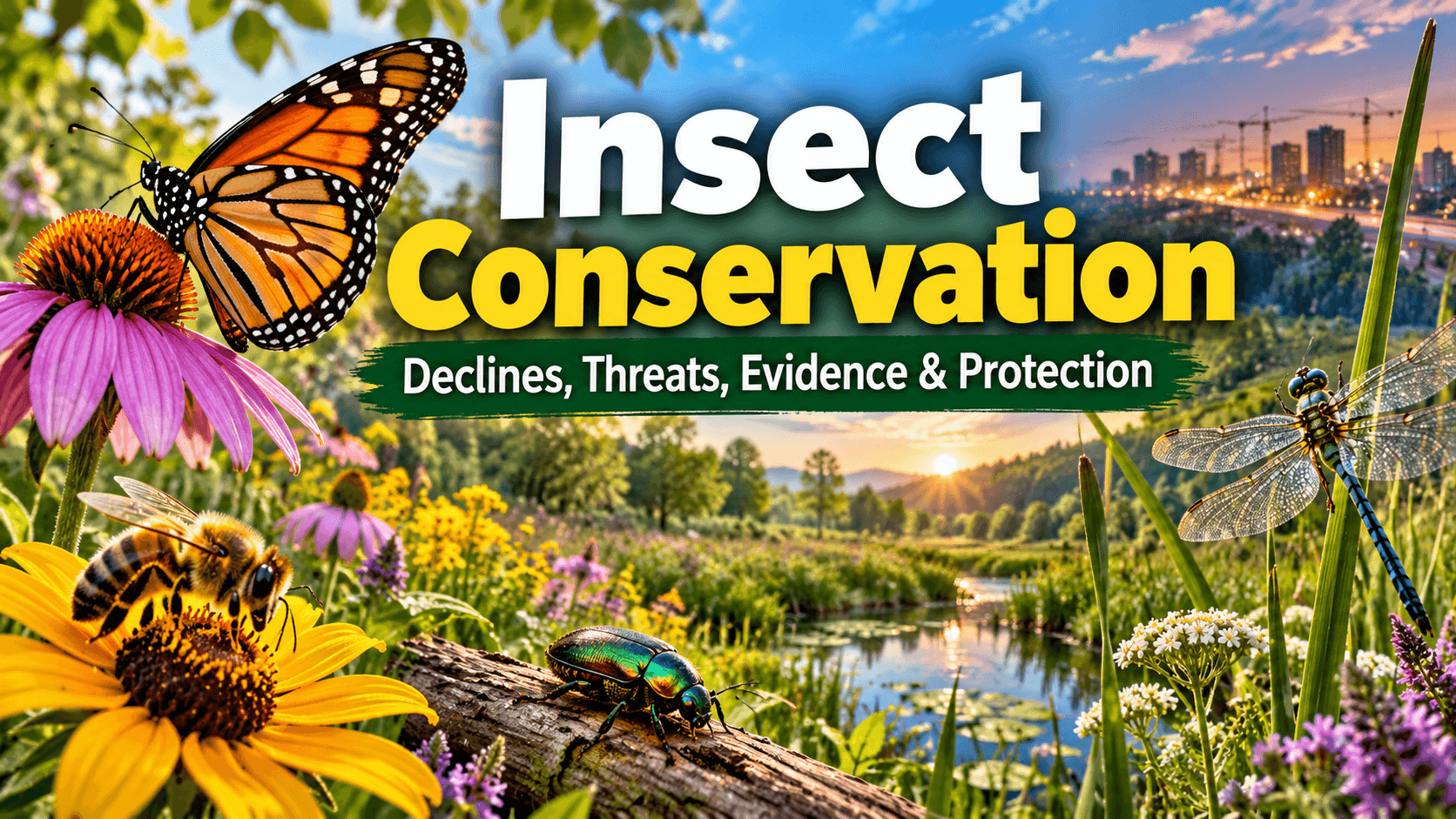
Insect Conservation: Declines, Threats, Evidence, and Protection

Insect conservation starts with a simple but easily distorted idea: some insect populations and communities are declining substantially, yet insects are far too diverse and poorly monitored for one global percentage to describe what is happening everywhere. A long-running butterfly survey, a light-trap record, a stream survey, and a biomass trap can each reveal real … Read more

Why Are Insects Important? Roles in Ecosystems

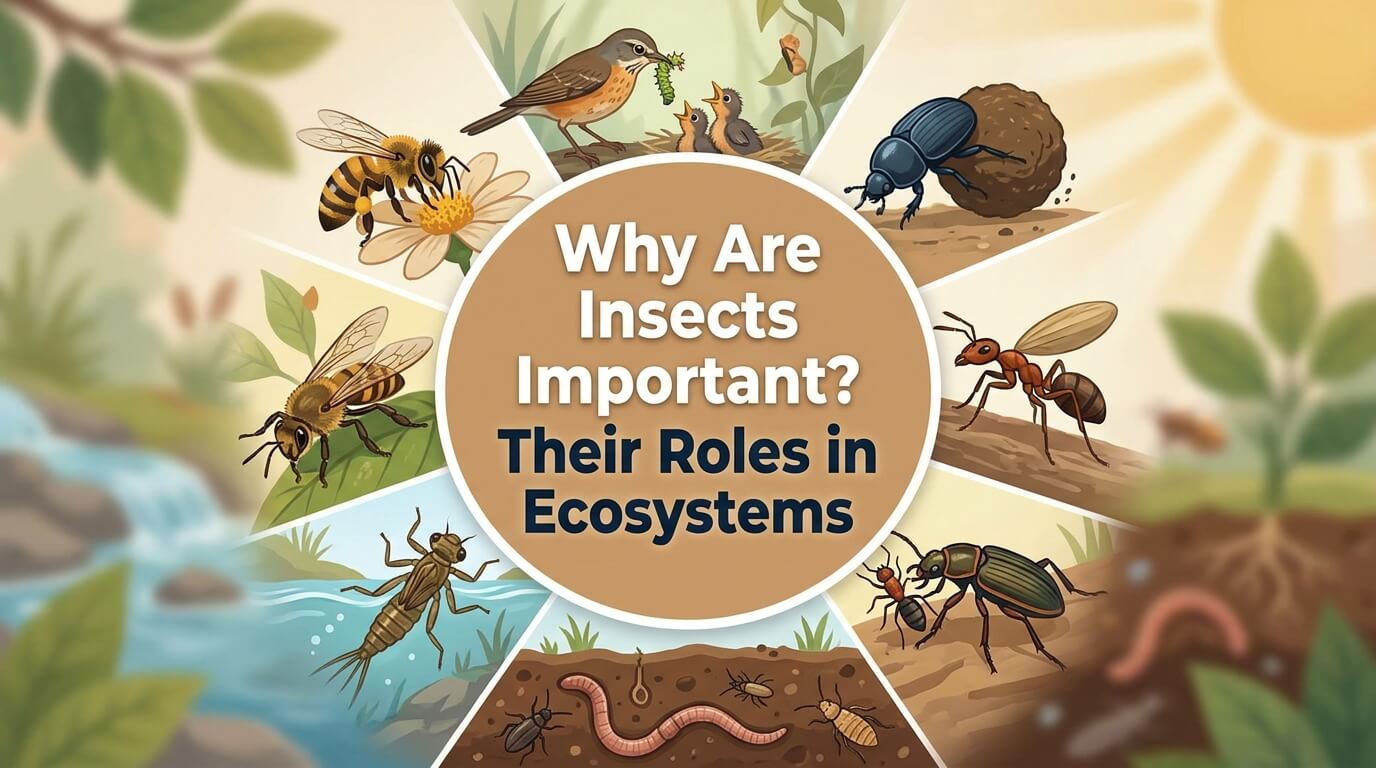
Why Are Insects Important? Their Roles in Ecosystems

Why are insects important? Because they do far more than pollinate flowers. Across forests, grasslands, deserts, farms, wetlands, streams, and cities, insects move energy through food webs, eat living plants, hunt other animals, develop as parasitoids, process dung and carrion, help break down dead wood and plant material, move nutrients between habitats, and provide food … Read more

Where Do Insects Live? Habitats & Adaptations

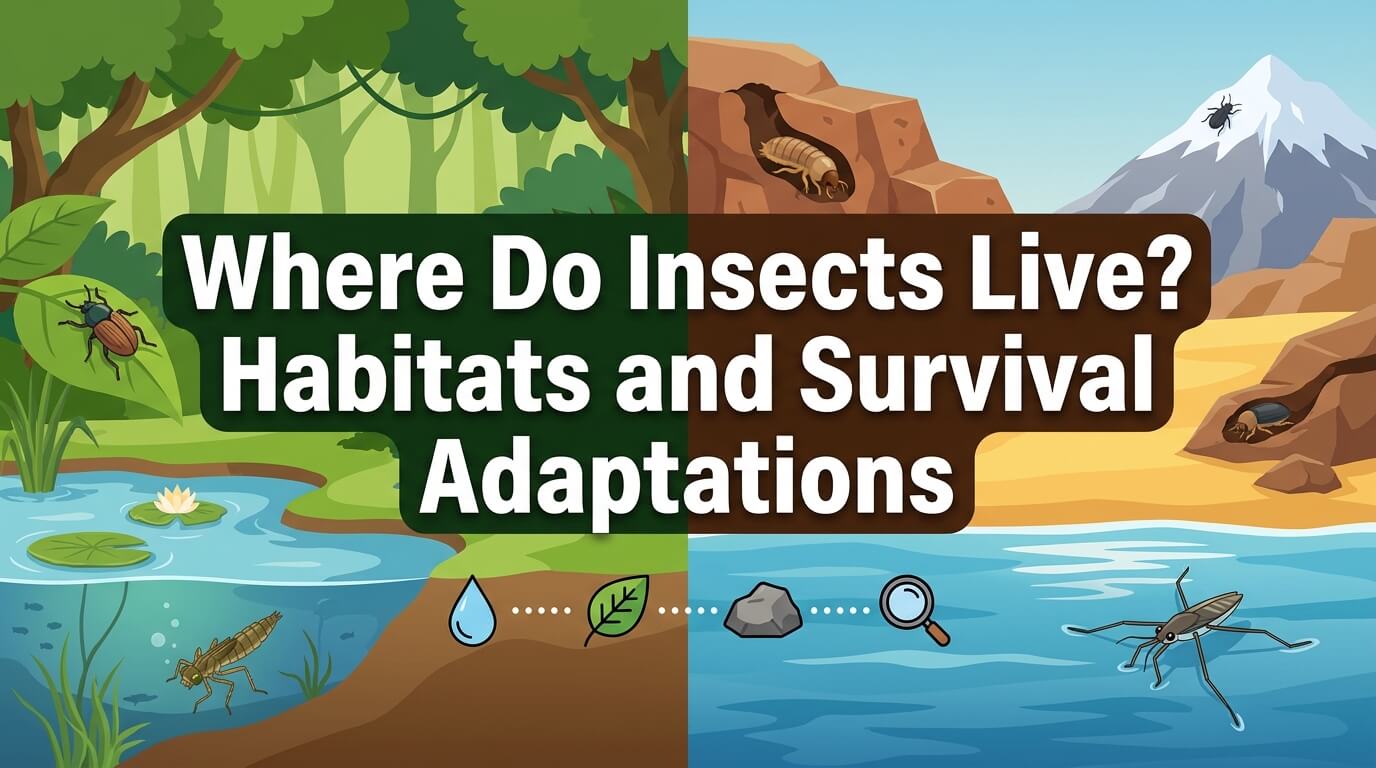
Where Do Insects Live? Habitats and Survival Adaptations

Where do insects live? Nearly every kind of land habitat and a huge range of freshwater environments support insects, from tropical forest canopies and desert soil to mountain tundra, ponds, streams, caves, farms, city parks, and the spaces inside plants. A much smaller number live in salt marshes, intertidal zones, or other marine-associated settings, and … Read more

Social Insects: Eusociality, Colonies & Castes

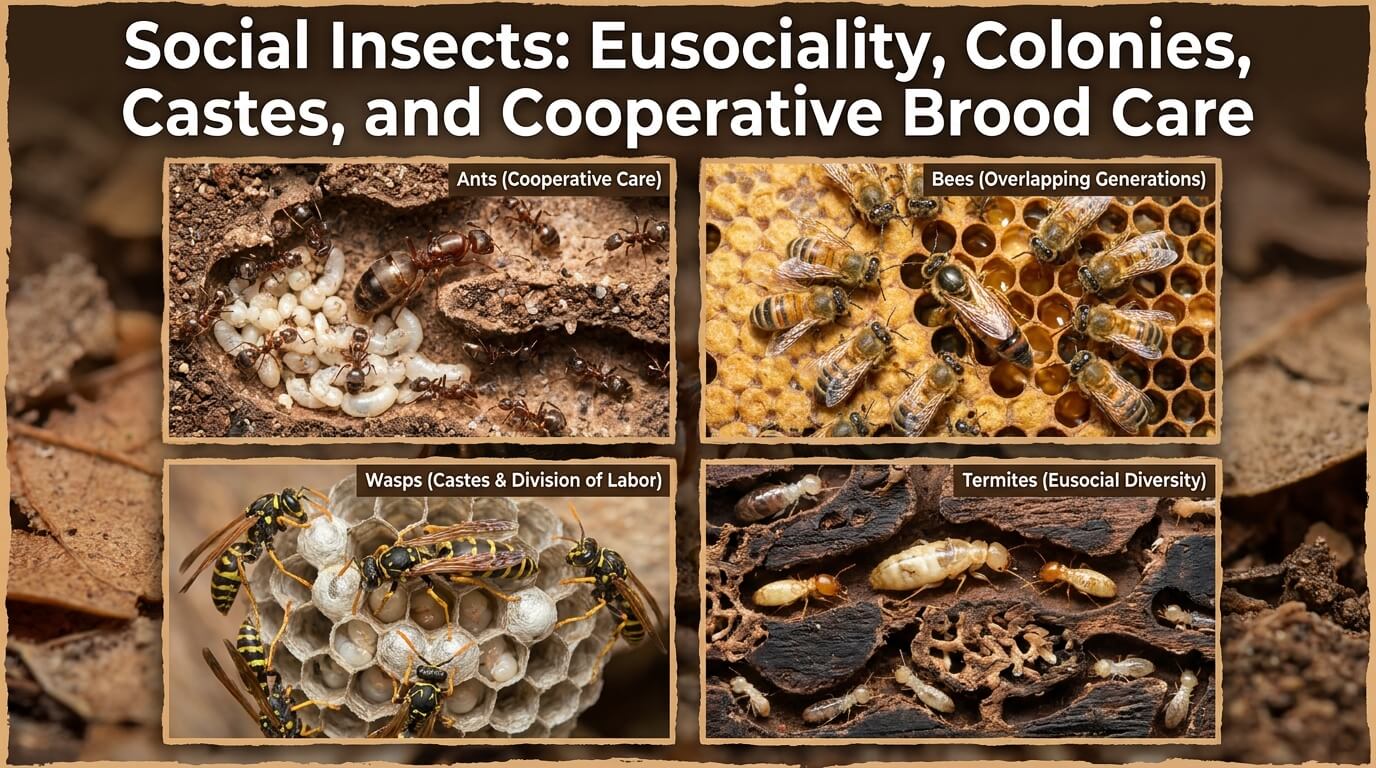
Social Insects: Eusociality, Colonies, Castes, and Cooperative Brood Care

Social insects show some of the most coordinated behavior in the animal world, but not every insect that gathers with others is truly social in the biological sense. Ants, termites, honey bees, some other bees, and some wasps can form societies in which individuals cooperate to raise young, generations overlap, and reproduction is divided among … Read more

What Do Insects Eat? Diets, Mouthparts & Feeding

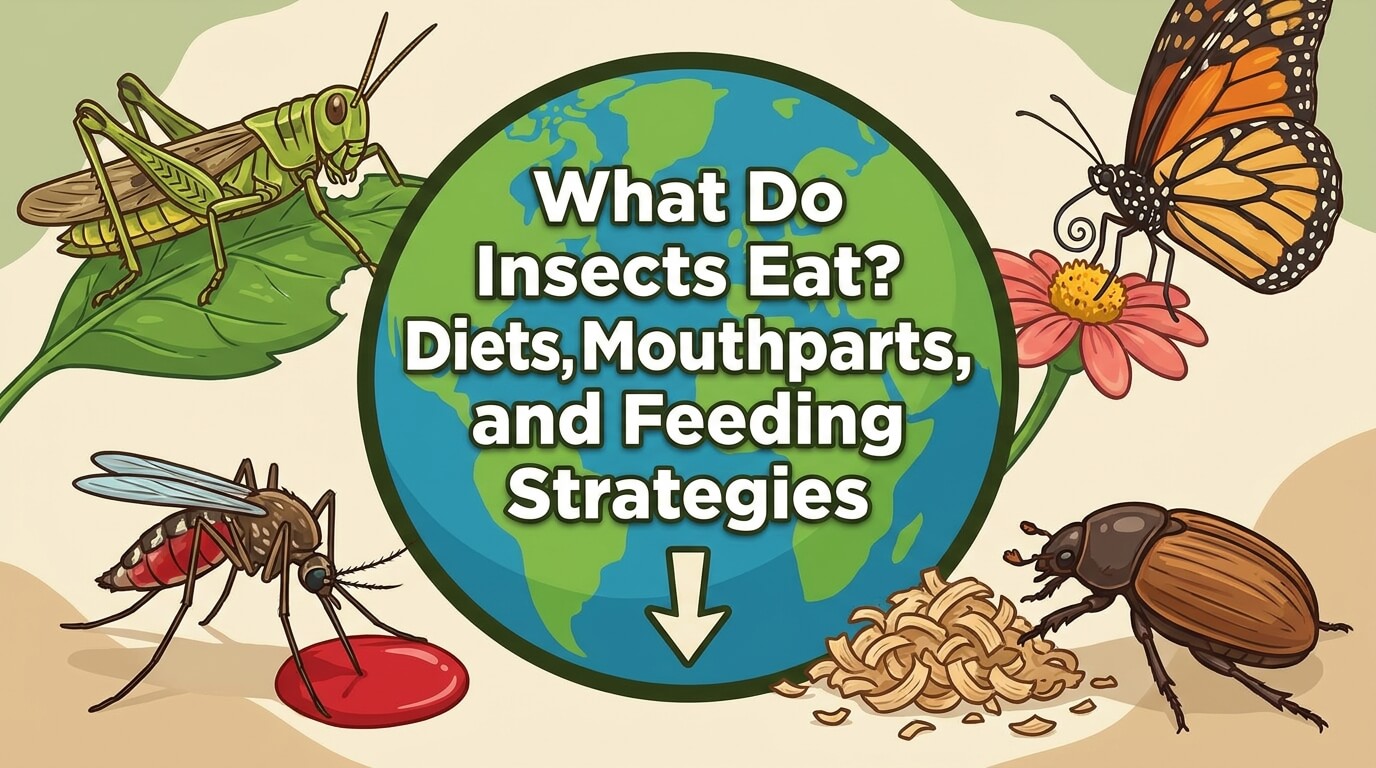
What Do Insects Eat? Diets, Mouthparts, and Feeding Strategies

What do insects eat? Almost anything that can be turned into usable nutrients, depending on the species. Some insects chew leaves, seeds, fungi, wood, carrion, or other insects. Others drink nectar, plant sap, fruit juices, or blood. Still others develop as parasitoids inside or on a host. The important point is that there is no … Read more

Insect Behavior: Foraging, Defense, Courtship & Social Life

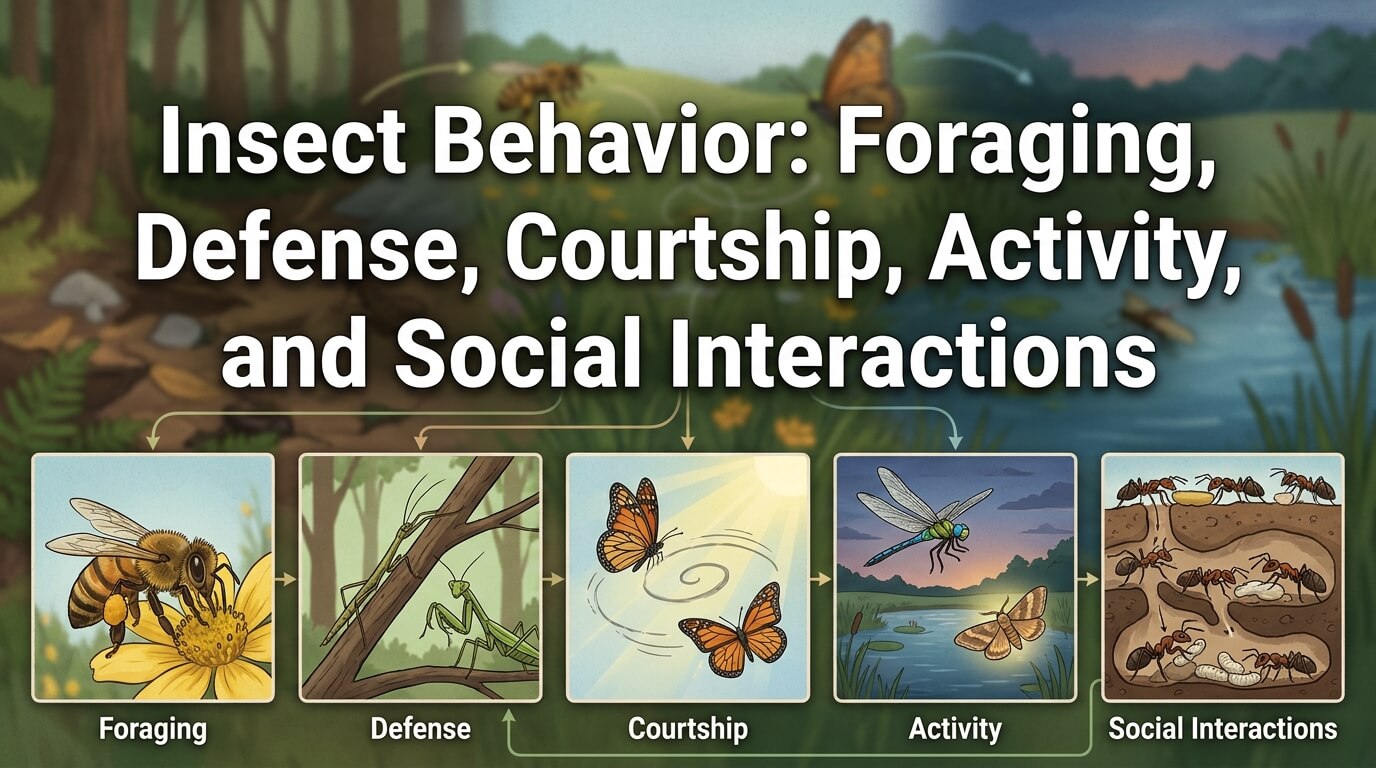
Insect Behavior: Foraging, Defense, Courtship, Activity, and Social Interactions

Insect behavior is far more varied than the stereotype of tiny animals running on fixed instinct. Insects use inherited behavioral programs, sensory information, internal state, past experience, and changing environmental conditions to decide when to move, where to search for food, how to approach mates, when to hide, and when to flee or defend themselves. … Read more

How Insects Communicate: Pheromones, Sound & Light

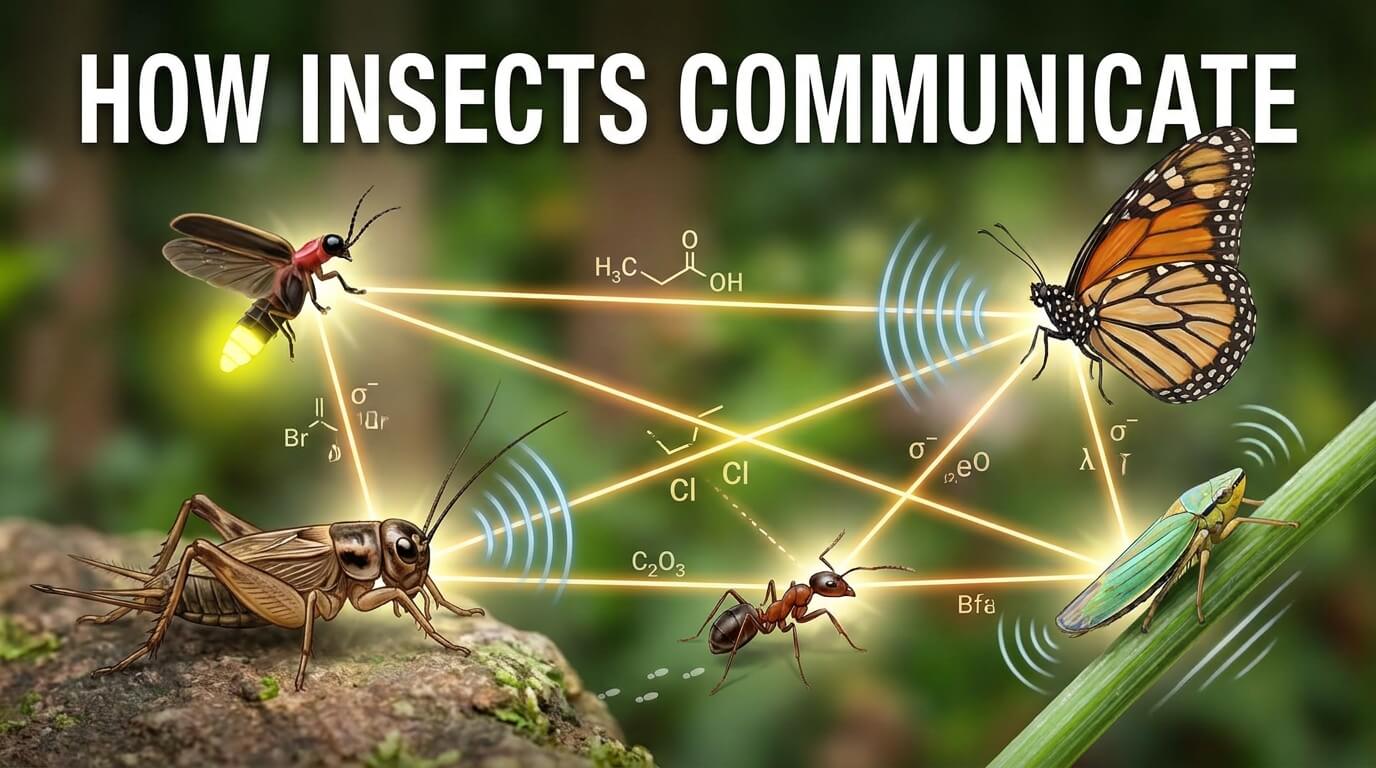
How Insects Communicate: Pheromones, Sounds, Light, Vibrations, and Visual Signals

Insects communicate in far more ways than most people notice. An ant may follow a chemical trail, a cricket may broadcast a mating call, a leafhopper may send vibrations through a plant stem, and a firefly may exchange timed flashes in the dark. Other insects rely on body movements, color patterns, touch, or combinations of … Read more